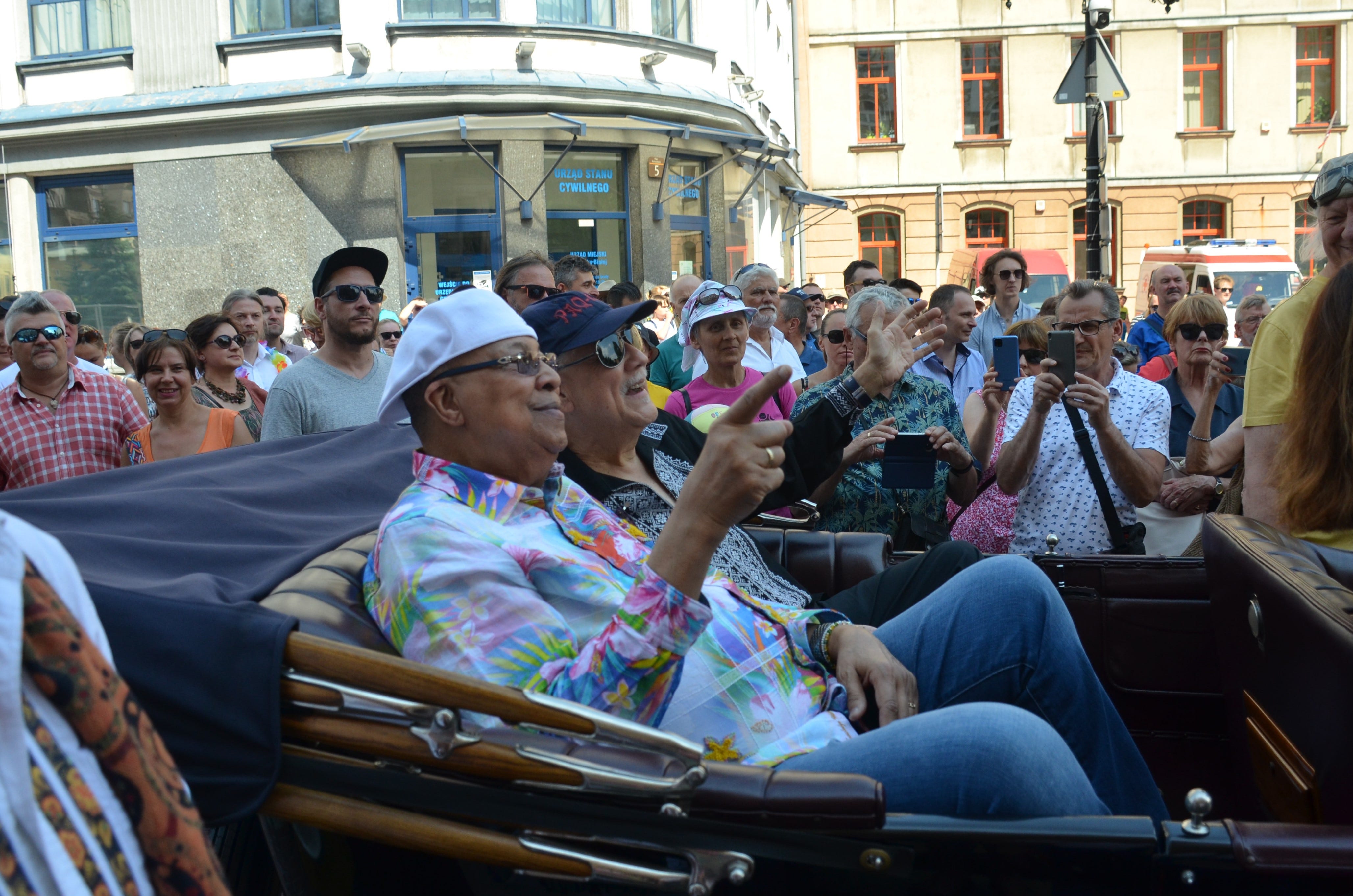
Chucho Valdès
The Allmusic Zine, 1999

In the Eighties and into the Nineties, the fusion of jazz with the music of different Caribbean cultures was well underway. From salsa to Nuyorkian, these combinations comprised an audio buffet, each one unique in its potential. Only Cuban music was conspicuous in its absence. Despite the cross-cultural explorations of Dizzy Gillespie and Chano Pozo and the “Spanish tinge” applied to jazz decades before by Jelly Roll Morton, this interaction became more nostalgic than contemporary in the early Sixties, when relations between the two countries froze in the wake of the Castro revolution.
But long before 2015, when diplomatic ties were reactivated, there were hints that the cultural wall was crumbling. The Buena Vista Social Club was among the earliest groups to win attention in the Nineties. A few years before that, though, publicist Don Lucoff contacted me at Keyboard Magazine with an unusual invitation: A sensational pianist named Gonzalo Rubalcaba was about to make his North American debut. Since the travel ban was still in effect, he would be playing in Toronto, but Don was kind enough to buy my plane ticket and put me up in, I believe, the hotel where Gonzalo would be staying. Our interview was informative but artful and careful, so as not to offend anyone back in Havana or with the GOP Tea Party in Washington.
A few years later, while living in Ann Arbor, I heard that a true giant of Cuban music, Jesus “Chucho” Valdès, was coming to town for one night, to play a solo recital at the Bird of Paradise, I believe it was. By this time, Cuban musicians were traveling freely to the States; Valdès blazed that trail in the late Seventies as leader of the fusion band Irakere. Still, as we spoke with help from a Spanish translator, he expressed wonder that even with Castro still calling the shots, the U.S. had become an essential and accessible destination for him and his colleagues.
My first impression of Valdès? He was (and is) tall, with the slight stoop that the vertically unchallenged often develop after a lifetime of ducking through doorways. Seated at the piano, he mirrors the instrument’s imposing size. He looms over the keyboard. His shoulders channel power down long arms to what may be the most spectacular hands in jazz – huge mitts, with an Olympic reach and fingers that pack a rare combination of strength and stretch.
Add to all of this a prodigious talent that manifested itself not long after infancy, a determined work ethic, a world-class technique, a sense of humor reflected in his shoulder-heaving laugh and deep smile lines, and you’ve got precisely the kind of artist who should have been entertaining American audiences long before he was allowed to. (Note: Since 2010 Valdès, now 84, has lived in Florida.)
****
Raised at the Tropicana
You began piano lessons very young, at age three. Can you remember what first attracted you to the idea of playing music?
If I am to be sincere with you, that part of my life I don’t remember, since I was so small. I’ve been playing piano since I have been using reason. It had to be, because my father is a pianist and my mother also plays piano and sings. So it must have been that I saw it so much in the house, so much playing. They say that I sat down and began to play without them having taught me. Yes, nobody taught me how to play the piano. Later on, they say, I was taught to place my hands correctly [on the keyboard], to play the melody. My father says that he was awestruck. He was taking a shower, and he sensed that a melody was being played on the piano, and he came out without any clothes on to see who was playing. And he said to my mom, “Look at that!! That’s something!”
Your father is still musically active, in his eighties. How is he doing these delays?
[Valdés grins and gives a thumbs-up.] He lives very well, in Stockholm, Sweden. He’s married again, and he has children and grandchildren. I have Swedish brothers now [huge laugh]. (Note: “Bepo” Valdès died in 2013 at age 84.)
You began studying music theory and harmony when you were five years old. How does a child that young decide to dedicate his life to that kind of discipline?
For me, it was because my father was and is my idol. I wanted to be like him and simply follow what he did. I wanted to be like my dad.
Your father was the music director at the Tropicana as you were growing up. What are your memories of that legendary Havana nightclub?
Well, you can imagine, for a boy, that was so special, to see the greatest Cuban musicians in person, to see, I don’t know, Ernesto Lecuona, Beny More, Arsenio Rodriguez, people like that, right there. I was dazzled by looking at the orchestra and at how my father played the piano too. Later, when I was about fifteen years old, I met Nat “King” Cole at the Tropicana. I was like, “Nat ‘King’ Cole!” And Sarah Vaughn!@ Her trio was Roy Haynes, Richard Davis and Jimmy Jones, a fantastic, tremendous accompaniment. For me, hearing these great musicians was like being on another planet. That opened my mind up, like, “I have to be just like them.”
How did the room look?
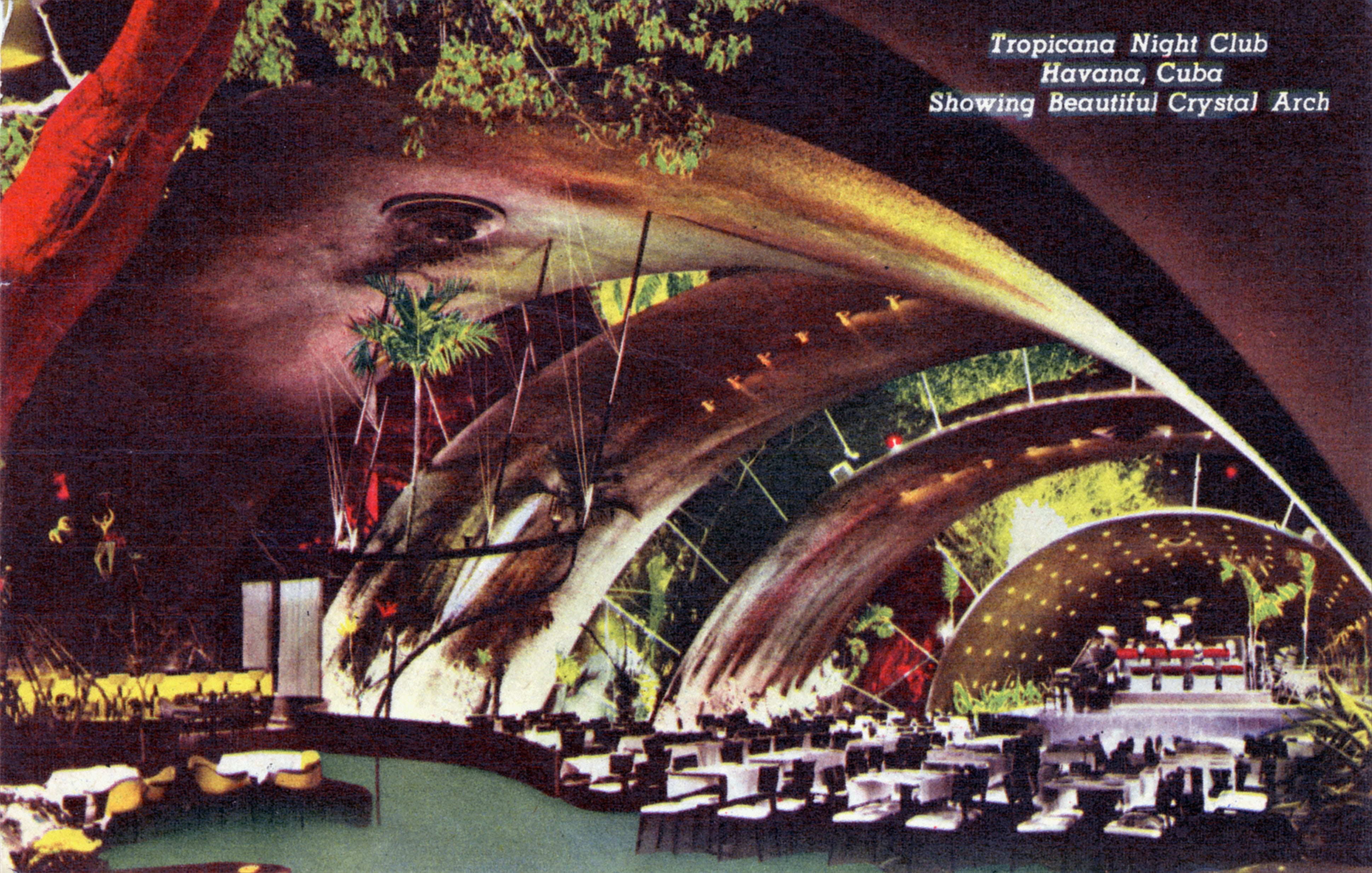
The Tropicana pretended to be a Caribbean salon, full of palm trees, because it was one of the biggest cabarets in the world. There were actually two salons. One was called Bajo las estrellas [“Under the Stars”], and that was uncovered. It was inside the building but without a roof and filled with coconuts, palm trees and things like that – tropical things. That was where they had the main shows. Now, on the days when it rained, they changed to a salon that was called Arcos de cristal [“Crystal Arches”], where the whole roof was made of transparent glass. Very beautiful.
A Fateful Game of Marbles
Did you play at any jam sessions at the Tropicana when you were a little boy?
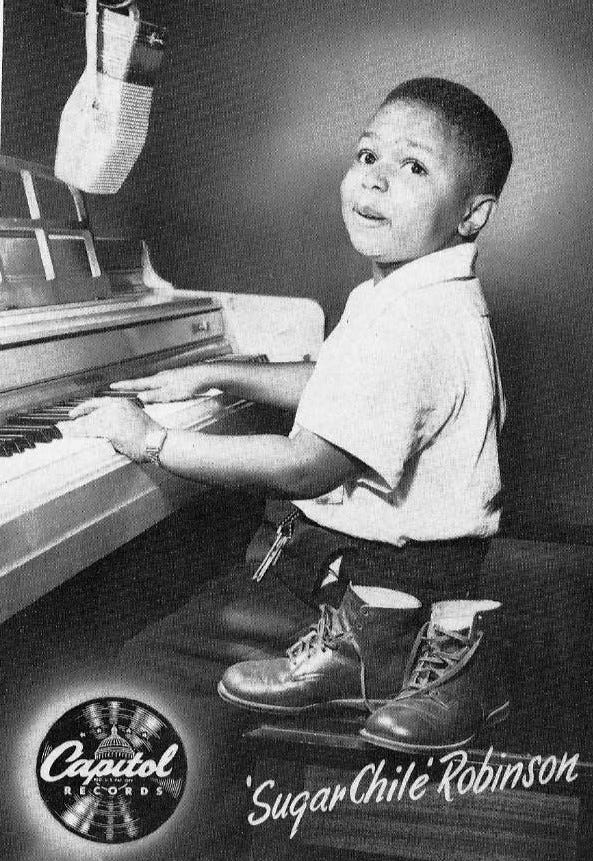
Well, there is a tremendous anecdote about that. When I was nine years old, the Tropicana booked a North American child prodigy. His name was Sugar Chile Robinson. He was twelve years old and he played boogie-woogie very well. [Valdés fingers a rolling left-hand pattern on the table.] So one night, I remember that my father told me to put on this white suit that I had: “We’re going to the Tropicana.” Now, I didn’t know anything was happening, but then he told me, “I’m going to introduce you to a boy who also plays the piano and is playing in the show.” When I got to the Tropicana, they introduced me to the boy. Although he was twelve years old, he was much shorter than I was. They asked me to play, so he and I started to play … bola [marbles]! [Valdes laughs.] We were in our suits, playing marbles! Then my father called me and said, “Come on, you can play something on the piano.” First he said, “Play the third movement of Mozart’s Sonata No. 2. Then play a danzon. Then play a cha-cha-cha.” This was in the musicians’ room, and all the musicians were around us.
A private room, not the main salon?
Yes, a private room. So after the cha-cha-cha, he said, “Now play a boogie-woogie.” So I played a boogie-woogie too. My dad wanted to demonstrate that I was already playing classical music, popular Cuban music and also the boogie-woogie, but I didn’t know what was on his mind or that he was planning this. So when I finished playing, a man in a suit came over and told my father, “He’s hired [laughs].! Their idea was, since they were producers, “Now we can put on the duo of the child pianists.” But when I got home at four o’clock in the morning, my mom was sitting there like this. [Valdes crosses his arms and frowns ferociously.] “What time is it? Four o’clock! He has classes early in the morning! No more Tropicana! To school!” [Uproarious laughter.]
So you and Sugar Chile never played that gig?
My mom didn’t want me to, because she said that if I got used to making money too early, I would not be studying.
Sounds like good advice.
Yes, very good. Of course, I was always going to the Tropicana, but to see, above all the rehearsals, not to play. I appreciate what my parents did. Now I am doing the same thing for my daughter. She is also very good. She won first place at an Italian conservatory; she was the only student to receive one hundred points. But she plays jazz too, and at the age of eleven she played at a jazz festival with me.
“My brain is one hundred percent jazz.”
Did you ever consider going after a career in classical music?
No, because I was always definitely dedicated to jazz music, to Latin jazz. Classical music was to draw out the best technique so that I could play more easily and have more facility to play jazz. But my brain is one hundred percent jazz.
What experience do you have with classical performance?
I worked for five years with the Havana Symphony Orchestra, until I founded the group Irakere.
Did you improvise cadenzas in your concerto performances?
In classical pieces? No. You have to respect everything in that music the way it is written. That’s why I don’t like it [laughs].
Formative Years
You put your first jazz trio together when you were sixteen years old. How did you feel at your debut gig?
Very excited. Very nervous. We began by playing in jam sessions. There was a club called Havana 1900. When I was starting out, I would go there and ask if they would give me a chance to play in a jam session, and they would let me play a little bit. They didn’t give me many chances, though, because I looked too young. Sometimes they would let me play a couple of things, but when I wanted to do more, they said, “Fine, you can play – bring a trio.”
Were you already trying to fuse jazz with Cuban music?
It was just jazz at first. One year later, I incorporated bongos and began to add the Cuban fusion.
So you were playing pretty much in a Bud Powell style?
Yes, bebop: Bud Powell, Horace Silver, Wynton Kelly. With the trio, I played funky. When I played by myself, I was more in the Art Tatum style.
It’s been said, though, that where Tatum represents the pinnacle of melodic and harmonic variation in jazz, Cuban pianists tend to improvise more with the rhythmic components of music.
I think that’s true. Caribbean and Cuban pianists think of the congas as they play; they play with less harmonic richness than you hear from American jazz pianists, in a more rhythmic style. But I have tried to do a combination of both things.
The Voice of America
When you were eighteen years old, in 159, you made your recording debut on an RCA album. Shortly after that, relations between Cuba and the U.S. came to an end. How did it feel to lose what seemed like an opportunity to break into the big time at such an early age?
Well, the album, it was not mine. I played in my dad’s orchestra in 1959. My dad signed the contract. I was a pianist, and my dad was the boss. My career was interrupted in 1961, but what interrupted it was the lack of information we were receiving from the States. One could no longer come to the U.S., because both countries had broken off relations. But we found a way around that: shortwave radio.
Did you listen to Willis Conover’s jazz program, Music U.S.A., on the Voice of America?
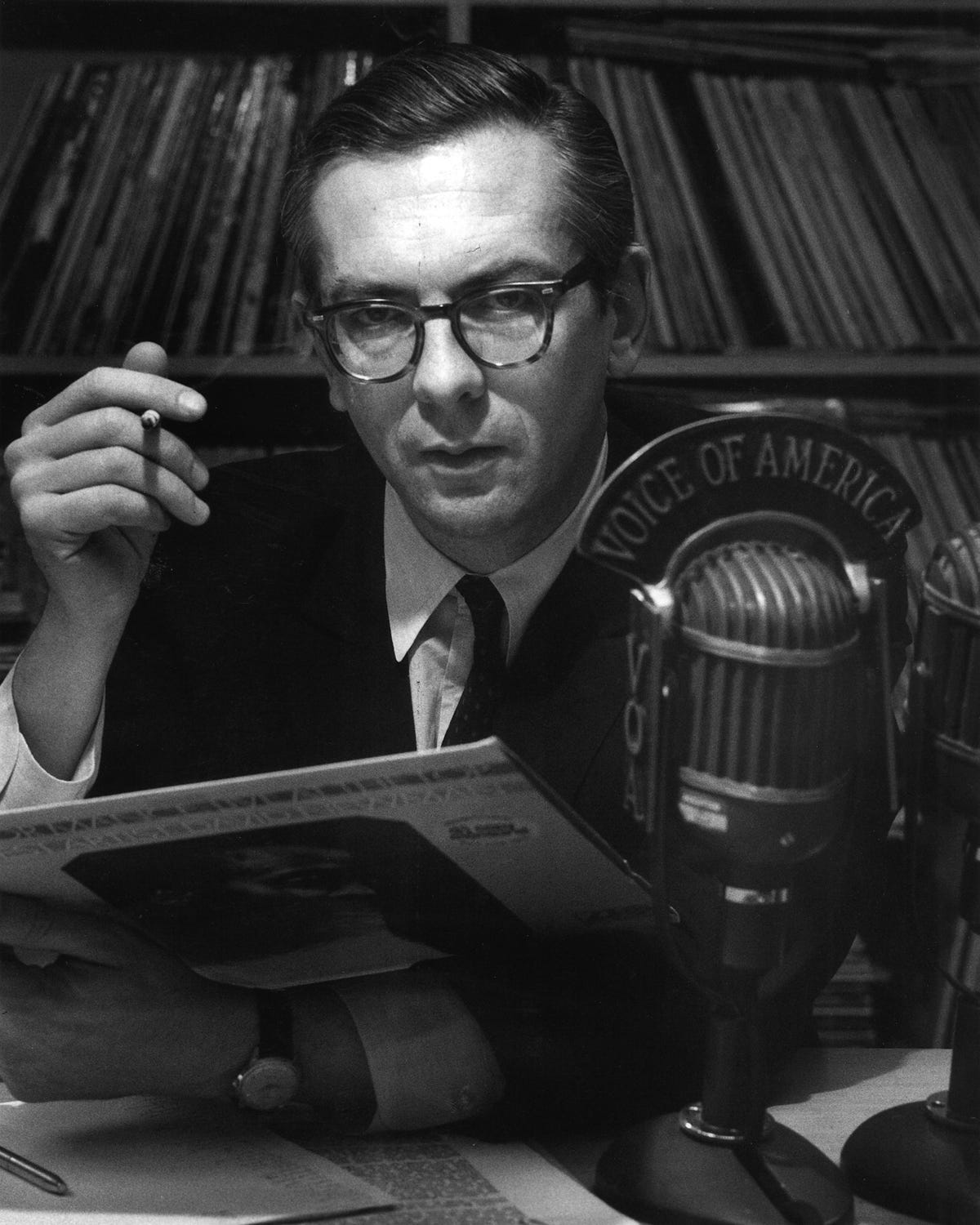
That was the only thing we had to listen to. With a tape recorder, people could tape the show. That was how I first listened to McCoy Tyner and Herbie Hancock. These were new things to me. I had stopped hearing anything new. I practically didn’t know who John Coltrane was. So it was a shock because there was a period where we were left with nothing to learn from. For example, one played a certain way until 1959 or ’60. Then, when Bill Evans’s trio came along, the combinations of piano and bass became much more free. But we didn’t know that. And the change that McCoy Tyner made, to play with harmonies based on fourths, it was like, it was like, what’s happening here?!”
That was a revolution in jazz chord voicing.
Absolutely! What really saved us was a Canadian diplomat in Havana who had all the great new records. One day, we had a jam session. He came to hear us and he liked the way we were playing. So he invited us to his house, and we saw the whole collection that he had. Everything was there! And when his diplomatic mission was over, before he left Havana, he gave us his complete collection. That was what put us once again in the groove. Then later on, we began to travel and buy records in Europe and elsewhere.
How did the revolution change everyday life for musicians in Cuba? Was it hard to find work as private nightclubs shut down?
Well, there was always playing. But there was one good thing: Money was guaranteed to the musicians, whether they played or not, by the Institute of Culture. That gave us time to prepare ourselves as players without worrying about money. There was no pressure. And there was a bad thing: The new government thought that jazz was political music, and so opportunities to play jazz were closed. We had to go through a lot in order to play jazz in those days. We only had jam sessions at our own houses.
In public gigs, then, you could play only Cuban music?
Yes. Jazz was prohibited.
Yet the gap between jazz and Cuban music seems rather small. A substantial common area exists between them.
Of course, because they have the same roots. But in 1967, the problem with jazz was ended, and it became possible to play it once again. They realized that banning jazz was a mistake, and so the Orquesta Cubana de Musica Moderna [Cuban Orchestra of Modern Music] was created.
At that point, all styles of jazz, all the way up to Cecil Taylor-like free improvisation, were allowed?
Yes. Everything.
…
America
Do you have a sense that Americans are out of touch with what’s happening in Cuban music?
I think things have gotten better, much better than when we first came to the States twenty years ago, in 1978. Much has been gained, but that doesn’t mean that it’s understood perfectly.
That was the year you first visited the U.S. with Irakere. What was it like to see America for the first time?
It was super-special. This was the first time a Cuban group was allowed to come and play in the United States – and we did it at Carnegie Hall! That night in Carnegie Hall was very special for me. Bill Evans was playing solo piano, McCoy Tyner was playing solo piano, Mary Lou Williams was playing solo piano, Larry Coryell and Philip Catherine were playing guitars together, and then there was Irakere. When I was able to see Bill Evans close up as he was playing, I pinched myself. I said to myself, “This is a dream! How is this possible?” Thyner and Evans, they were my favorite pianists. I couldn’t believe what was happening there, especially at the end of the concert, when Paquito [d’Viera] told me, “There is someone who would like to say hello to you and tell you that you played very well.” Then he brought this person into the dressing room, and this person extended his hand. When we shook hands, he squeezed mine so hard that it was swollen. When I looked up and saw his face, I nearly fainted. It was Bill Evans! Right then and there, I told him how much I loved him. I talked to him about the recordings that I liked the most – and I asked him for a lesson [laughs].
“I have a wall between myself and the word ‘politics.’”
How difficult was the paperwork involved in bringing Cuban musicians to the U.S. in 1978?
That part I don’t know. I know that we were told that we would be going to America and that everything had been done to make it possible. We were actually so immersed in preparing our music that I wasn’t aware of anything else. You see, I have a wall between myself and the word “politics.” In my world, politics do not exist. It’s just that I am so immersed in music that, thank God, I don’t worry about that.
You’ve been to America several times since then. How has this affected your own playing?
It’s brought much more richness to what I’m doing. I learned jazz by listening to records and transcribing from them, listening and practicing. But when you can see and work with jazz musicians directly, your language enriches itself to an incredible degree. It’s all about the flavor you can acquire and how it affects your sound.
In terms of your approach to harmony? Your keyboard touch?
In terms of the ideas, the melody lines, the harmonic concepts. It’s very subtle. Working with Wynton [Marsalis and the Lincoln Center Jazz Orchestra] was a good education. And with Roy Hargrove.
Both of them have been criticized for looking too much toward the past and doing too little to explore new directions in jazz.
Well, I don’t think they’re going into the past. I wouldn’t understand it if they were just staying in one place, but I think it’s more that they’re going back to their roots, the pure roots. That is different. You can return to the roots and then jump that much further ahead. Wynton can do that.
But do you think that their aesthetic conflicts with the fusion work of Miles Davis and other innovators in the Sixties?
We can’t all think in the same way. Yes, we need to revolutionize our music and move toward the future. But not everybody can get there. Miles got there. Herbie [Hancock] got there. But how many more? Not anybody else! What you might call returning to the roots is about renourishing yourself with a kind of purity that gives you the strength to move forward. It’s happening in Cuba right now: Buena Vista Social Club represents a return to the identity of Cuban roots.