
Gatemouth Brown
Allmusic Zine, 1999

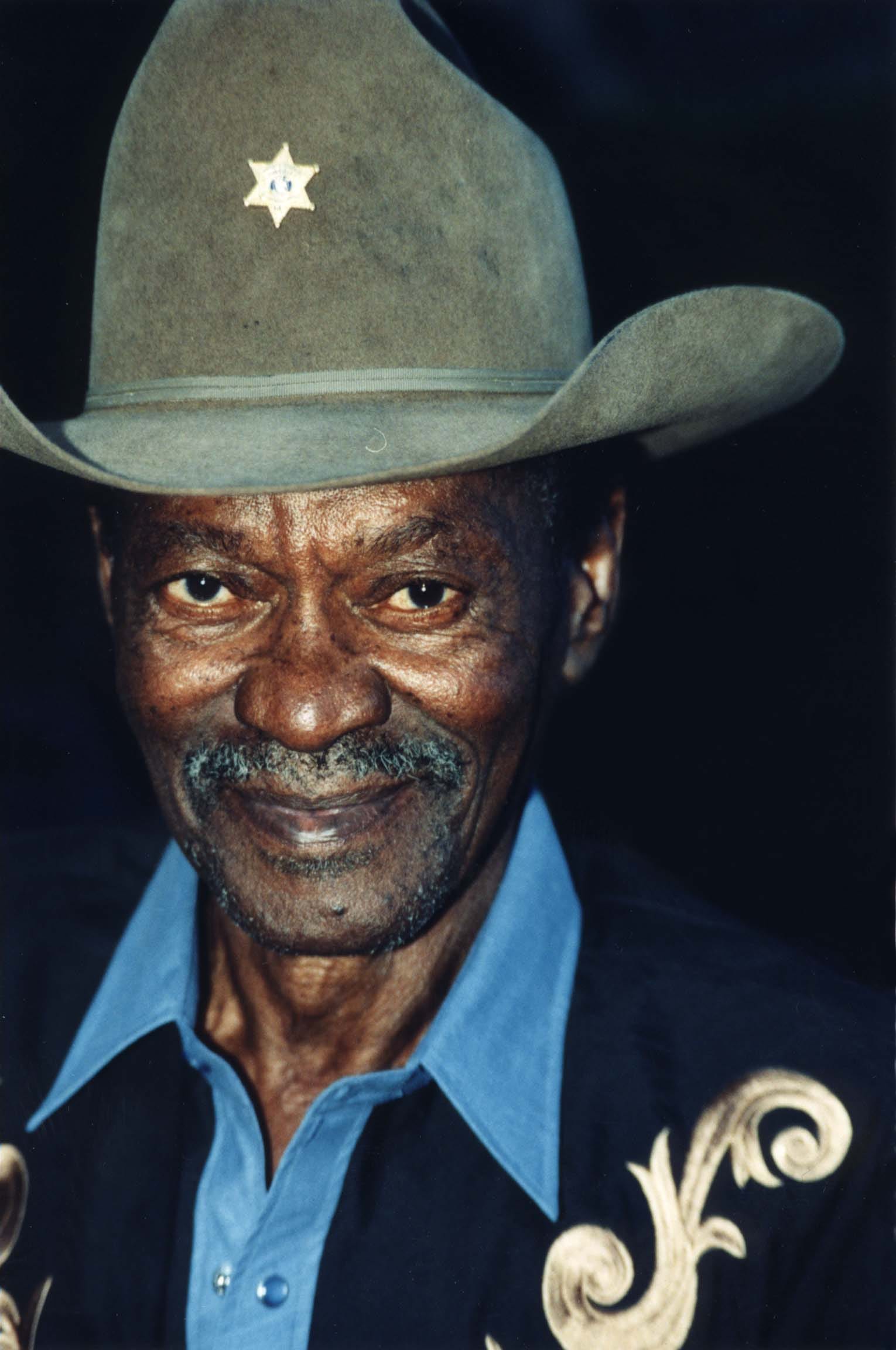
Clarence “Gatemouth” Brown was a pivotal figure in American music. Few artists at the time had witnessed the changes that Brown had experienced over his lengthy career. When he began playing gigs on the road more than fifty years before we met, most restaurants on his route wouldn’t serve him or his band. White folks were scarce among his listeners – as scarce as the money in the players’ pockets.
When we spoke in 1999, however, his reputation had spread far across racial and musical lines. Through listening to and performing in multiple genres, he had staked out a place where those genres could interact and enrich each other. More than most musicians, he had come to embody all the strains of American roots culture; this distinction alone qualified him as something of a national treasure.
And it earned him the right to cruise from coast to coast on his own wheels, which when we met was parked in the lot next to Gibson’s Caffe Milano in Nashville. A little sun roof opened in his private quarters in the rear of this sleek, black bus. Well-worn Birkenstocks rested beneath a table, on which a pouch of tobacco – a customized “Gatemouth’s Blend,” made by Elliston Tobacco in Nashville – lay open. Seated on his bed, the veteran guitarist, singer and bandleader stuffed his tiny, elaborately wrought pipe.
“I sell these at my gigs,” he chuckled. “Both the pipes and the tobacco. Do pretty good with ’em, too.”
As a performer that night, Brown took his time, letting his band warm up with a couple of numbers onstage while he slouched against a back wall at the venue, listening in the shadows, his trademark Western hat tugged nearly over his eyes. Then, when he’s introduced, he ambled through the crowd to the stage, where he strapped on his Gibson Firebird, settled onto a stool and hit the opening tune. He strummed insistently within the rhythm section and played his solos in a distinctive style, with stiff, straight fingers instead of a pick.
From his family’s Victrola and crystal radio, and from his father Tom Brown, a gifted multi-instrumentalist, young Clarence absorbed the nuances of big-band swing, Cajun music, bluegrass, blues and even polka in Orange, Texas. By age sixteen, he was on the road with his first band, Howard Spencer and the Gay Swingsters, after which he gigged throughout Texas with W. M. Bimbo and His Brownskin Models until being drafted into the Army one day after the Pearl Harbor attack.
Brown’s career as a bandleader began in 1947, when producer Don Robey booked him into the Bronze Peacock, a popular club in Houston, to sub for an ailing T-Bone Walker. Since then, Brown has survived long stretches when work was hard to find, as well as the even longer era during recognition and acclaim have come his way. At the time of our interview, he had compiled a long list of credits that included projects with Jay McShann, Canned Heat and Roy Clark. He had also toured Africa and the Soviet Union, opened for Eric Clapton at the Royal Albert Hall and won three W.C. Handy Awards and one Grammy.
Just before the end of our conversation, there was a knock at his door and a note was passed his way. He skimmed it, and his face brightened.
“Look at this! DeFord Bailey come to see me. Not the old man,” he clarified, referring to the late, great black harmonica player who was a fixture for decades at the Grand Ole Opry. “This is his son. Now, DeFord Bailey for many years was the finest harmonica player. He recorded with all the country artists in this town. But they would never let people know who he was. They kept him hid, but they used his music, okay? Then, just before he died, they publicized who he was. Yes, sir. Now, DeFord Bailey Jr., he’s a bass player. But his dad? Boy, there was a musician.”
Just like Gatemouth Brown.
****
You’ve been playing professionally for more than fifty years.
Yeah, since ’47.
When you walk into a club to perform in 1999, is it different from doing a club gig in 1947?
Yes, way different. Number one, in 1947, there wasn’t no such thing as black-and-white clubs. It was all-black clubs, and it was all-white clubs. During that time no black artists were gettin’ white clubs, but in the Sixties I broke into ’em. In fact, I broke into ’em mostly right here in Nashville. I stayed at Printer’s Alley [Nashville’s club strip] for about six months. I did a TV show here. We put it together, then went to Dallas and filmed it because Nashville did not have color video at the time. That was in 1965. I know a lot of people here, man. A lot of people know me, put it that way.
But back before then, I worked all over the United States. At that time the black clubs was dominating the white clubs. It was great. Some people called it the chitlin’ circuit, but it wasn’t no different from the clubs we have today – only in, uh, nationalities. The whites was sneakin’ into the black clubs, and they had a segregated place for the whites to sit. It’s a crazy world.
Everything went fine. I never did have no real problem in a club. A couple of problems I had, I didn’t need no organization to help me. I did it myself.
Are you thinking about some specific incidents?
Oh, no. I’m talking about all my gigs. I never did have no big organization coming in, telling people where I could and could not work. I worked where I wanted to. I was the first artist who crossed over the fence halfway and moved into the white club world, all over the United States. It was in 1965 that I went to Bogota, Colombia, for the first time out of this country. I was there for six months. It was beautiful, that part of the country. I learned to play all kinds of music, like Spanish music. I played a bunch of that down there, and I still do, when I feel like it. That’s why, when people ask me what kind of music I play, I say I play American music, Texas drive. And that’s it.
When did you begin integrating your band?
Well, I was the first one who started doing that in the Southern part of the world. What I did, I hired some white musicians, good musicians. I mixed ’em up with my black musicians. In some places they wouldn’t let me play. I said, “The hell with you. I won’t play.” Like one time, we went to Algiers, Louisiana, and Little Rock, Arkansas. They said, “We don’t allow no mixing here.” I said, “What you call mixin’?” “White and black musicians.” I said, “I tell you what. You play it yourself.” That’s exactly the words I used. And I packed up and left.
How did the musicians themselves feel about working together?
Well, every musician that I’ve known understood and liked the way I handled things. They’re people like everybody, but musicians grow closer together in all nationalities than the outsiders.
Did it change the feel of the band when you started adding white guys?
It made a different type of sound, but it made what I wanted to hear. That was important.
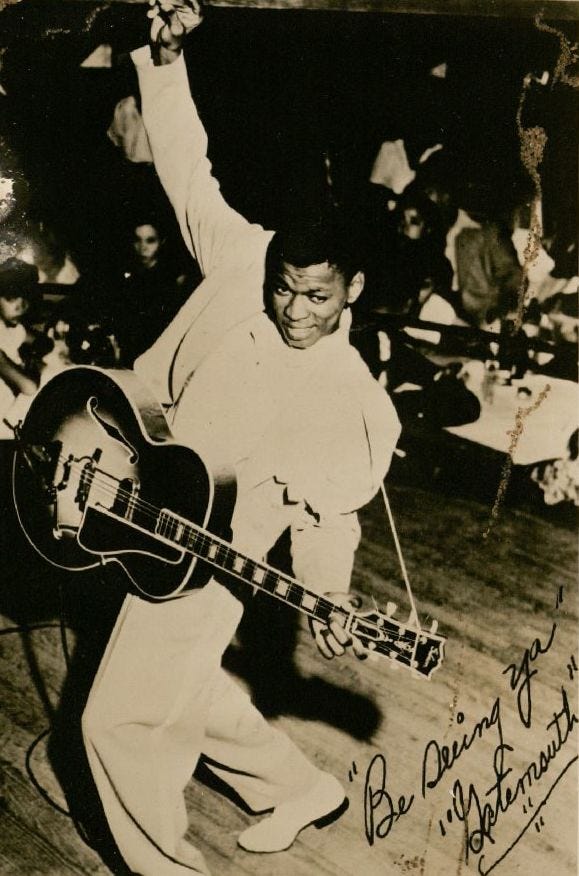
Were your first gigs in the Forties with horn sections?
Yes, See, that’s something else that people don’t understand. My first four sides were with a big band out of California. I flew out there for the Maxwell Davis Orchestra. They made my first four sides, playin’ behind me. I’ve always used horns. Very few albums I did without horns.
What was the instrumentation like with Davis? How big was the horn section?
Oh, man. I can’t remember how many. It was a full horn section, like on my latest album [American Music, Texas Style] and Gate Swings. I had thirteen horns on there, plus my rhythm section.
Gate’s Drive
How did horn sections in the Forties stack up to the sections you’re recording with these days?
They’re different because, in the first place, you see these guys talkin’ about big bands? That’s exactly what they have, a big band, but they don’t know how to voice ’em. Yeah, they got a big band. There’s a thousand horns out there. But how you voicin’ ’em?
You’re talking about the arrangements.
Yeah, because they just don’t know what they’re doing. Back in the Forties, they had some writers.
If you take a chart from the Forties and gave it to musicians in the Nineties, would today’s musicians play it differently?
Well, that depends on who they are. Some people no, and some people yes. I try to pick the best horn men I can find, who can play my charts without being off-key.
So the ideal horn section player is someone who can blend into the arrangement?
That’s right, play them charts, because I have certain men that solo. Everybody’s not a soloist.
The second and third trumpets have to play well.
That’s right, and the first and the second got to be good solo men.
What about the way rhythm sections play today and fifty years ago?
Well, there’s a difference. At least mine’s different. I have a drive that no one on Earth can have. I have a certain type of punch. Like my drummer: He plays off-beat, but he’s still on-beat. You have to hear him to understand. I’m running one horn [on the road], but what we do with this one horn, my keyboard player and myself, we play the horn charts with the horn. So it sounds like a big band,just these pieces together. We play the horn parts.
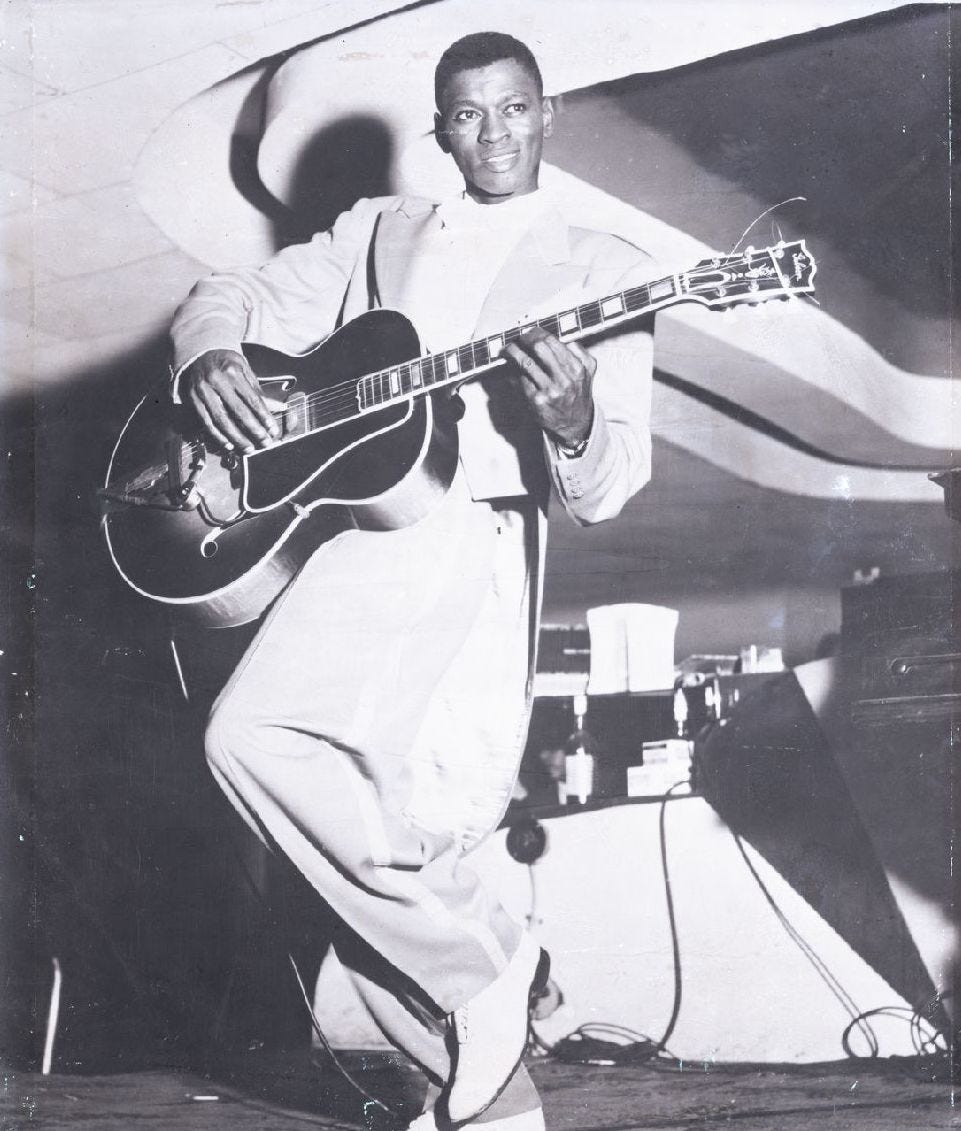
How can today’s musicians learn to play with the kind of feeling that players years ago brought to their music?
By listening to what I do. You can hear many bands, but nobody – nobody – has the type of sound that we have. And I’ve got some great musicians out there. My bass player has been with me for fifteen years. My drummer’s been with me since ’76. I hired him as a kid, took him to northeast Africa. First time I ever went to Africa. He was all over Africa with me. I got rid of him for a while when he went with another band, which folded right quick. He came back to me and he’s been with me ever since. See, I know the thinkin’ of everybody in my band, and everybody in my band knows my thinkin’. That’s it.
How have drummers specifically changed over the years?
See, back in the early days, every drummer that you knew was playing ahead of the backbeat. Now, I don’t do that. And them jazz players, the beboppers, they had their own way of playing, like Dizzy Gillespie, a friend of mine, and Charlie Parker. But I just have a different system. I got what they call Gate’s Drive. It’s really different.
And your drummer knows how to fit into that.
He knows!
If I were a drummer auditioning for your band, what would I have to do to get the gig?
Number one, have perfect timing. I don’t like a rushin’ drummer. I don’t like a draggin’ drummer. The worst drummers on Earth are rushin’ or draggin’ the timing. A good friend of mine, I saw him last year, he looked really sick. It was Louis Bellson. He’s startin’ off like this [taps a medium tempo] and he winds up like that [speeds it up]. He’s looking very sick, and he’s my age. [Jazz drummer Bellson died in 2009, ten years after my interview with Brown.]
Well, you’re looking good.
Nothin’ gets old with me but my clothes.
You must weigh the same as you did forty years ago.
Yeah! I never been a heavy man.
What do you eat on the road?
What I like to eat, and that’s very little. On the bus I’ll say, “I think I’ll run in here and get me a sandwich.” An egg sandwich. Fried egg sandwich. And sweet lemonade.
Friends & Favorites
Who would you consider the greatest musicians you’ve ever known? And what makes them great?
I would say Count Basie, Louis Jordan, Ray Brown, Oscar Peterson … I didn’t like everything Count Basie played, but certain tunes I like. I do some of Louis Jordan and some of Charlie Parker, in that Kansas City style. I used to like some of Woody Herman’s tunes, although I’ve never recorded one yet. That’s about all I can think of right now.
You actually knew these guys?
Oh, yes. I learned a lot from these heavy jazz people. They took me under their arm because I was the youngest person out there that veered away from, “Oh, my heart’s hurtin’, my woman done left me” and all that old kind of stuff.
Have you played with Ray Brown?
No, we haven’t played together, but I listen to him. And Duke Ellington.
You must have dug the Oscar Peterson trio tracks with Ray Brown on bass.
Oh, yeah. I like drivin’ music. I don’t want to overplay, but I like good drivin’ music, as you hear in my music. It’s got a beat where you can sit and do this [taps his foot]. I love to see the ladies doin’ this. When you can’t do this, the music doesn’t mean nothin’.
You’ve described that aspect in your music as a “Texas drive.” What is there about Texas that defines your music?
Well, I don’t know. I really can’t answer that. I notice a lot of guitar players out of Texas that sound like everybody else they’ve heard, and I avoided that. That’s all, I just avoided it. I got my own unique style that I play. Now, I can take tunes like “Take the ‘A’ Train.” See, that’s not a Texas thing. “One o’Clock Jump” is not a Texas thing. I can name a bunch that are not a Texas thing, but I mold ’em into myself. I use the identification of these people who wrote these tunes, but I put myself into it to make it completely different.
You’ve mentioned some of the jazz artists who have influenced you. What about rock & roll players?
Well, I listened to some of Bill Doggett, like “Honky Tonk” is on one of my albums. It was a very nice tune. I didn’t choose everything that he did.
How do you figure out which musicians to recruit for your album sessions? And how do they affect your playing?
It does not affect the way I play, because I can take any chorus I like. But I like different choruses. I like people that can play. I don’t care who you are: If you can play, you can play and I want you to play. Like Leon Russell was on Long Way Home: Eric Clapton, Leon Russell, Maria Muldaur, Willie Weeks – he’s a black bass player. Jim Keltner, a white drummer.
Why did you go with Leon Russell, for instance?
Because he’s a heck of a piano player. See, him and Clapton wrote the opening tune on this thing, “Blues Power.” But I would discuss it with the two after [producer] John Snyder took it back to New York and screwed it up. See, Clapton and I was supposed to play back-to-back solos. The Japanese got the first version [of the album], which was really great. But when I heard the thing again, John Snyder done took me off of the thing, as far as the guitar, and put Clapton on it. And poor Clapton was runnin’ in circles, because I think he just re-ran the same solo over and over. Clapton didn’t like that, I didn’t like that, the world didn’t like that. So he lost a friendship with me. That’s right.
The Menace of the Blues
When did you first play electric guitar?
That was in ’47. The first guy I ever heard with the electric guitar was T-Bone [Walker].
What did you think of it?
Well, what an electric guitar does is the same thing an acoustic guitar can do. You play it the same way, but electric guitar projects your sound out, where an acoustic won’t do it. That’s the only difference.
You were already playing acoustic guitar at that time.
Yeah, but no one knew it. I never exposed myself on guitar. But it was my main instrument. I learned strummin’ behind my daddy as he played it, when I was five years old. Then when I got to be ten, I tackled his fiddle while he was at work. It didn’t sound too good, I can guarantee you that. But I kept learning. I developed my own style. I didn’t listen to no other fiddle players, because I knew no other fiddle players, except my dad. And my dad played country, Cajun and bluegrass. That’s all he played. I knew nothing about blues and jazz ’til I got to be seventeen or eighteen years old, but I tried to do a different kind of blues because I heard a lot of Delta blues and it wasn’t to my taste. I mean, those people, that’s what they did. And they still do. But it’s not to my taste, you know?
“I just don’t see a person puttin’ a woman down, because without a woman, wouldn’t be us.”
What don’t you like about Delta blues?
It’s just sad. It made me feel very sad. Everything’s about trouble and disasters of life, and I see life way different than that. People ask me about T-Bone: I listened to him back in San Antonio in 1946. He was a good guitar player, but that was it. Everything he said was, “I hate that woman, that woman did me wrong.” And that’s not to be done, because I love my mom. I don’t have her anymore, but I just don’t see a person puttin’ a woman down, because without a woman, wouldn’t be us. Anyway, I just don’t like negative music, where you’re beggin’ for help. Why not give help instead of beggin’ for it? As soon as you give it, you receive it anyway. Now, I’m not religious, but I’m just givin’ it to you, straight from the shoulder.
After I got to be a teenager, around fifteen, I used to sit across the street from these old barrelhouse places, where people were drinkin’ and fightin’. I sat across the street because I was too young to go in, and I didn’t want to go in anyway. It smelled terrible, that old liquor they were drinkin’. But I’d listen to this music, and it made me very sad. I would say, how can a person live so bad in life? And I’d notice these people’s lives wasn’t good at all. They were just existin’. It wasn’t nothin’ that I would want to live, and I didn’t do it. See, it’s one thing to be poor, but it’s another to be violent about it. You don’t have to be violent. I came from a poor family, but it wasn’t a violent one.
Weren’t blues musicians just trying to ease other people’s miseries?
No, they wasn’t easin’ no miseries. They was puttin’ it on ’em. You see, an entertainer is a role model to the world. I don’t care whether it’s good or it’s bad: If you out there sendin’ out bad messages, we got young kids listening to this, and they don’t know no other way. That’s what’s wrong with a lot of white society today. They think that’s the only music in the world, some of ’em. That’s why I resent that idea of blues, because I’d be talkin’ to people in interviews and I’d say, “If I had to interview you and I would ask you, ‘What is the blues and what do you think the blues is all about?,’ the first thing you would do is name one of them Delta musicians. I’m not callin’ no name specifically, but there’s a bunch of ’em out there. And everybody doin’ the same thing.
The country music, it’s the same thing. It’s not the Delta blues, but it’s the country blues, where this guy’s feelin’
Sorry for his self and he’s trying to put it on everybody else. Why do that? They ran out of ideas [for] making country music, so what they did, they just took rock & roll, put country lyrics with it and called it country. It’s a vicious circle. That’s why I try to have my own way of playing. I don’t have to get into this, and I won’t do it.
The Death of Country Music
You’ve played a lot of country music.
That’s right. I play fiddle and viola and mandolin … I’m not playing mandolin nowadays too much, but I’m playing viola and fiddle. I got some nice country tunes out there, real country tunes. I wrote some country music that I have not recorded yet.
Why did you decide to play a viola instead of a violin on some tunes?
Well, we didn’t call it no violin. I still don’t. The violin came from the classical side of music; the fiddle comes from just good music [laughs]. Classical people got to go all the way around to make a point. I’ll go straight across here and make the same point with a shortcut. I’ll cross the fence, cross ditches and everything, but I’ll get there before you will. Then, if you notice, all classically-trained violinists, as they call themselves, don’t sound nothin’ like what I play. Nothin’!
So how do you decide whether to play a certain part on viola or fiddle?
Depends on what I’m playin’, on that feelin’. The viola is heavier; it’s got a heavier tone.
Have country music audiences been open to what you’re doing with their music?
This is funny, but one time years ago, I played at a place and a lady walked up and said [in a Southern accent], “Hey, I want you to play me some country music.” I said, “What country [laughs]?” I actually did a whole lot of country. They wouldn’t let me in the door at all, but they couldn’t stop my music. They wouldn’t let me on The Grand Ole Opry.
Do you want to play on the Opry?
Not really. But I did Hee-Haw. Me and Roy Clark. I had to have him to get me on it, and he had to have me to get on Austin City Limits. You see what I mean? It’s a tradeoff.
Something tells me you must have listened to Bob Wills as a kid.
A little bit, yeah, when I was growin’ up. I picked up a tune or two that I played of his, just like everybody else that I liked. But not everything. I found that he met himself comin’ back, in a lot of ways. Remember what I said earlier [about country music]? It ran out of ideas. I can hear a melody that’s been played a million times with different lyrics. When that got old, they started taking the burned-out white rock & roll and they put country lyrics and the pedal steel in it and called it country. That’s what they’re doing. And it’s been billions of dollars.
“A lot of people was pushed to be great stars, and that’s what killed ’em.”
Not many of the young country singers have led the kind of life that enables them to tell real stories in their songs.
They was pushed up there, man! A lot of people was pushed up to be great stars. That’s what killed ’em. Not only their career, but physically, mentally and any other way you want to look at it.
Yeah, but Elvis led a tough life when he was starting out.
Yeah, well, you see, Elvis was pushed up there for no reason at all. The media are making more money on him now, after he’s dead, than they did when he was alive. And all the man did was rip off other people’s music and take the credit. Like, I remember his first one, “Hound Dog.” That tune was by Big Mama Thornton, and she died broke, not a dime. He died, of course, but look at all the millions he made off of that.
Actually, Jerry Leiber and Mike Stoller wrote “Hound Dog.”
Well, I don’t know anything about history. All I know is that was her tune.
Don’t you think, though, that unlike his later commercial stuff, the early Elvis music reflects some of the hardships he faced as a poor kid?
Let’s just say I stand on the Fifth Amendment [laughs].
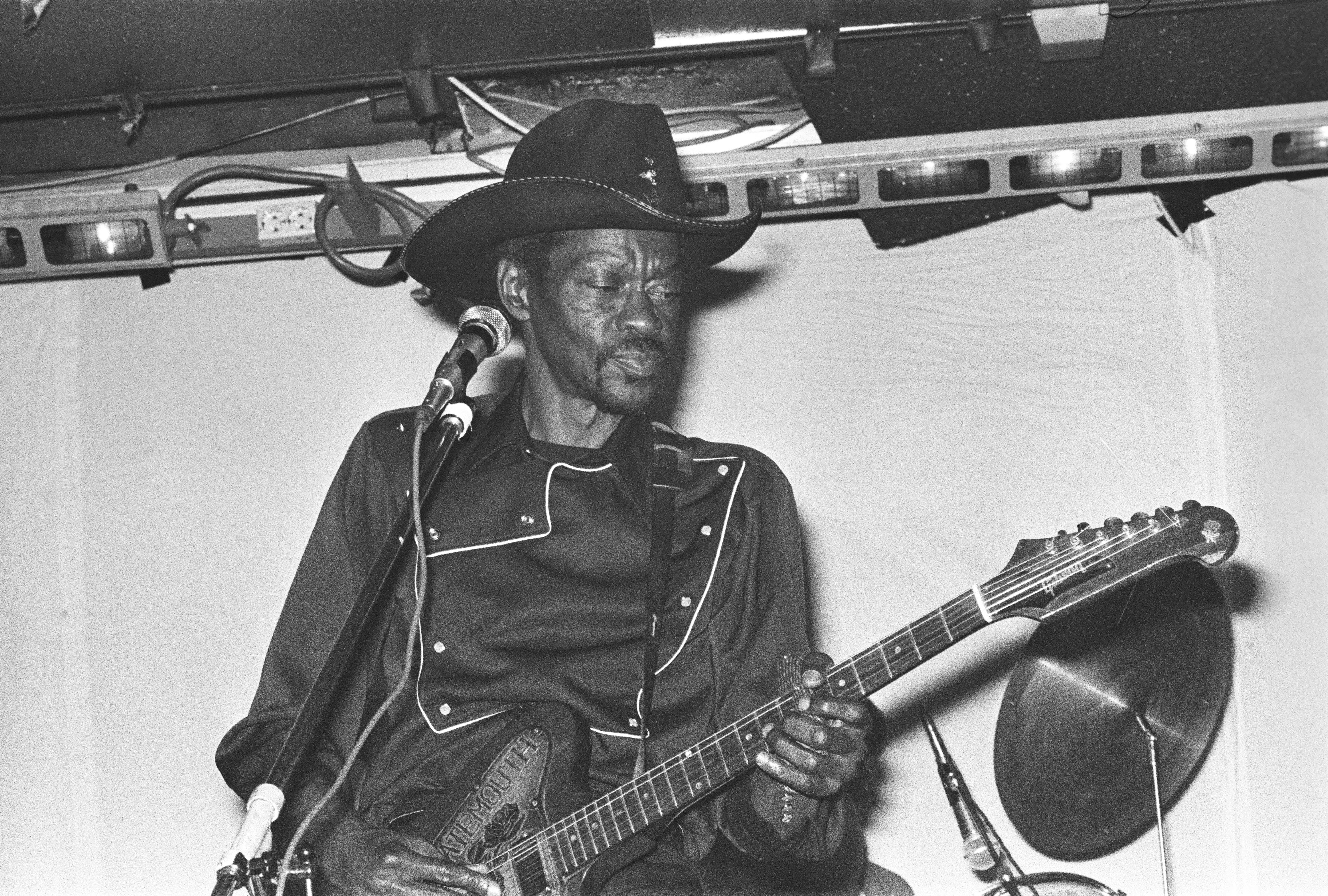
[Note: Clarence “Gatemouth” Brown died in his hometown of Orange, Texas, on September 10, 2005.]
A great read - Gatemouth was, and still is, a Texas treasure. His color-blind approach to sharing his music made a difference and earned him a broad fanbase. Thanks for sharing this.
Gate always had a superb band with him. Nightly, He would give them an instrumental or 2 so that they could stretch out on their own. The shows I caught had the band sounding like Jeff Beck circa Wired. Not exactly in the blues crowd's breadbasket. There are band leaders whose ego or business sense wouldn't allow it, but Gatemouth Brown was a great musician and a hell of a man.