
Joe Galante
The Tennessean, Dec. 15, 2002

When my job with the Allmusic Zine ended in the year 2000 after months of inane internal feuding, I was for the second time thrust into the freelance world. Having been there before, after Billboard Publications discontinued Musician Magazine just over a year earlier, I wasn’t too terrified. My plans were vague, or rather nonexistent, but I knew that my next step was to leave Ann Arbor, return to Nashville and hope for the best.
Opportunities didn’t exactly overwhelm me once we’d returned to the house I’d bought when Musician moved to Music City in the late Nineties. So I flailed around a bit until hearing that a job had opened up at The Tennessean, Nashville’s longtime daily. and even joined a group of glum losers in some kind of job search group.
And then there were the newspapers. I forgot how I did it or who made the introduction, but my pursuit of other interests led me to the doors of The Tennessean, Nashville’s longtime daily. My first professional gig had been at the Austin American-Statesman, way back in the early Seventies, so I was guardedly optimistic. The paper already employed two gifted music journalists, Craig Havighurst and Bill Friskics-Warren, but with country music rocketing into the pop charts, they were ready to ramp up their already terrific coverage.
So I submitted my résumé, clips and references to an HR person who seemed intensely interested. Some time passed, which I filled by picking up freelance work and staring anxiously at my silent phone. The call I’d hoped for never came, but I did hear on local news that the estimable Peter Cooper had been hired.
I must say here that Peter was probably more qualified than I for that position. Sure, I’d been a big-shot national magazine editor, but my knowledge of country music was almost nonexistent. As I told someone at the time, my idea of “country” was a vacant lot in Queens. But Peter’s knowledge and empathy for the style was vast, he wrote crazy good copy and was an excellent musician to boot. Still, I’m not proud to admit that I was pissed off at the time that nobody at the paper had bothered to return my email and phone messages.
However, I did find another way into The Tennessean. It might have been Jeannie Naujeck, a staff writer in the Business section, who worked me into their freelance location. Over the next few months I wrote a few stories for that part of the paper; one even made it into USA Today, since both were owned by Gannett. This took me back to an approach I hadn’t followed in the 30-odd years since my run at the American-Statesman. Candidly, there is very little difference between a record label’s PR bio and an artist profile for, say, Country Weekly or Rolling Stone. Both are about celebrating the achievements of some performer. They allow for a smidgen of critical background, assuming the subject has vanquished drug addiction or escaped from some loony cult, thus making his or her latest album that much more amazing. But, by and large, they’re almost always puff pieces, at least to a degree.
Not so for business stories. Here, you need numbers, facts, trends – all the boring stuff that makes this such vital reading for CEOs. Bluntly, you have to do more research and have plenty of data at hand to elicit appropriate responses to your questions. It’s a whole ‘nother ballgame. And with file sharing and digital sales only beginning to alter the country music, not in the least in the form of trimming down the number of your employees, there were plenty of questions to ask.
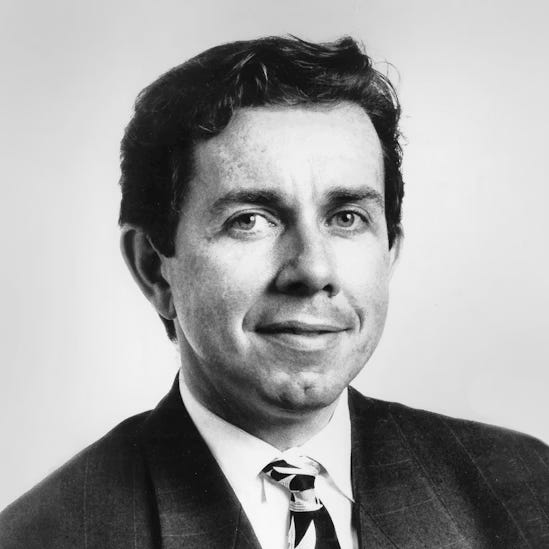
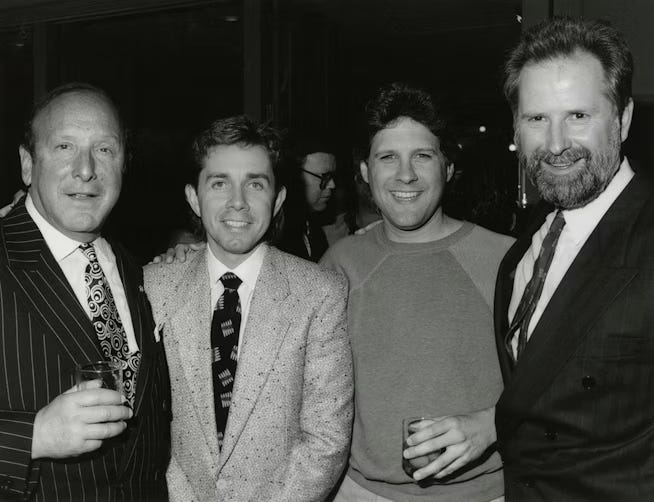
Fortunately, I’d done this sort of thing before. And given my recent prominence with Musician, I was able to pitch some top local executives to the paper. One of them was a sit-down with Joe Galante, at one time a wunderkind fresh out of Fordham University and a job at RCA’s New York office before transferring to Nashville as chairman of the RCA Label Group. A week or so after that, I was in his office. On his windowsill overlooking Music Row, there were three statues of Nipper, RCA’s venerable canine mascot. But clearly, at least in his fourth-floor office, Galante was the top dog.
****
According to the current Billboard, RCA Label Group, which includes RCA, Arista Nashville and BNA, has four of the top ten albums on the country charts. What are you doing, and what are your competitors not doing, to achieve that kind of success?
I moved back here [from New York City] in ’95, and we started making changes to the RCA Label Group back then. The first thing we did was to swallow the touch medicine. We reduced costs. We consolidated our manpower and reduced our roster and made some people changes. We got, in my opinion, much better-qualified staff members onboard, and we increased the responsibilities of the people that were here and who we felt strongly about. Basically, we built a better team with the people we had and with the roster.
You made some especially significant changes in your A&R department.
It’s interesting that the largest part of the country music marketplace today is women; those are the buyers. If you look around town, most of the decision makers, in terms of music, are men, in records and in radio. So we increased the amount of women we had in our department. It’s headed up now by Renee Bell, a senior VP who’s had sixteen years in this business. She also understands country music better than most people in town.
Has increasing the profile of women led to identifiable differences in the company’s performance?
There’s always a moment in discussion where it’s a guy thing and a chick thing, but I just think that Renee has a different sensitivity than most people do in terms of finding artists and songs and understanding where they come from. That allows us to build better albums – not just collections of singles, but albums that have a real viewpoint.
What criteria did you apply in choosing which artists to drop when you trimmed your roster? Was it purely a matter of how well they were selling?
Numbers obviously play into it, but if that were the case, Sara Evans wouldn’t have been on the roster, because her first album did 25,000 units. More important than the numbers was the question of who we believed could be stars in the future and who would be core artists to what we do as a label group.
In an interview you did four years ago, you said, “I have no evidence that country radio is going to open up to the fringers. We’re about reaching that star-sales level.” Did the O Brother phenomenon disprove the notion that non-mainstream artists wouldn’t sell in country music?
It would if you could show me the artist. Show me the acts that support this theory.
Well, Alison Krauss is also in the Billboard Top Ten this week.
I would not want to say that Alison Krauss has broken because of O Brother. We had a record from her at BNA, When You Say Nothing at All, that helped her sell almost a million units on the album that followed that, going back to 1996. That’s a long time before O Brother. But even if you took Alison Krauss, who are the next four or five?
Music in the Air
Are satellite and Internet radio affecting how you break country artists?
No. We’ve been talking about Internet and satellite radio for the past several years, and it’s had absolutely no impact, because the consumer has to pay for it. The public hasn’t bought into it yet, so it’s not a major driver in our format and I doubt it will be for the next few years. I don’t even know if satellite will survive.
What about traditional broadcast radio? How well is it serving country music, compared with ’98?
Numbers are probably down, in terms of listeners, from ’98. I don’t know the exact share that we had back then, but my guess is that it’s been down over the last several years, along with the marketplace for country music in general.
“The environment out there doesn’t give us the room to be more forgiving.”
If you were an artist, how would your strategy for building a career in this era of digital music different from what you might have done, say, ten years ago?
I don’t think you’d have the time today that you would have had ten years ago. There’s a microscope over each artist’s performance, whereas ten years ago we’d probably be on our third album before we started to ask ourselves whether we were going to keep this person. Actually, you begin asking that question once the artist begins a second record, assuming they get through the first one. You really have to be a true believer for every artist you sign. Unfortunately, there will be times where, even though you have that belief, something will crop up where you’re going, “I don’t see how we’re going to make any progress on this.” We make tough choices daily. We don’t do it once a year, when we all gather in a room; we’re constantly having these conversations about what’s right for the artist. That means we have to make choices about which people can stay and make use of all our time and resources. Now, there are going to be some losers. There’s nothing I can do about that, because the environment out there doesn’t give us the room to be more forgiving.
That must be the most emotionally difficult aspect of the work you do.
I have to be honest with you. Because we sign so few artists at this company, we give them every opportunity. Going back to Jim Lauderdale, Jim came up to me on a plane six months after it was over and said, “Thanks. You did everything you possibly could. I appreciate the opportunity.” That’s a load off my shoulders, because Jim is a great guy. He writes great songs. We were passionate about his music although not everybody else was. But he understood that we tried, and that’s all you can ask of a company, that they put their time, their effort and their money behind you and not just give you lip service.
Why is so much less time available to break an artist nowadays? Do listeners have less attention span to devote to following an artist’s career? Are they more fickle? Are they in too much of a hurry?
Yes to all your questions, but on top of that you have a corporate problem. I don’t think any business has more time on its hands to make decisions than it used to have. So these time pressures are pushed on us from a business standpoint as well as from the consumer standpoint.
Does some of that pressure come from digital file sharing on the Internet?
The impact of file sharing and downloading hasn’t been that great on country music. We’ve begun to feel it slightly. You have to realize that we’re an adult format, and most adults take a while to change on a technology basis. So we can’t really use digital channels as a mechanism to build word of mouth because these aren’t eighteen-year-old kids trading music files with their friends. Our customers use the Internet to do their email, their finances and their research; they’re not using it for music … yet. That may change, but I don’t know what the time frame is.
So your retail focus, at least for now, remains primarily brick and mortar?
Right. We’ve worked with subscription services, but so far it hasn’t been a business for us. If you took all the money that we, as an industry, have put into Internet business over the last five years, it’s well over a billion dollars in terms of the amount of investment. I can tell you that we have to hit a hundred million dollars collectively over a period of time in terms of revenue. We’re trying to build that model, but it’s a very small part of what we do.
If You Can Make It There …
You’re a New Yorker by birth, and you’ve worked extensively in Manhattan as well as Nashville. How do the two cities compare as centers of this industry?
In New York and L.A., it’s really about the business. It’s attorney-driven; artist development is secondary. It’s about staying current and trendy. It’s about the quick fix. Here [in Nashville], you’re talking about building an artist, which means you’re building a relationship, and that contributes to a sense of community here. This allows you to draw from resources and friendships that can help you during the course of your career. In New York, an entire administration can be blown out after you’ve made a relationship. I worked for four or five guys in New York in a matter of ten years. So there’s constant change.
It sounds like you prefer the Nashville approach.
I think it’s about heart. There’s a work-for-hire idea in New York, where a producer is hired to do a track without even knowing what it sounds like, just so you can use his name. Here, so much is about the song and the artist’s interpretation. There’s a creative sensibility. You spend a lifetime with a group like Alabama: Randy Owen and I are exactly the same age, so in a sense we’ve grown up together. All those songs represent a fabric in your life, and I’m not quite sure that kind of relationship is there in New York.
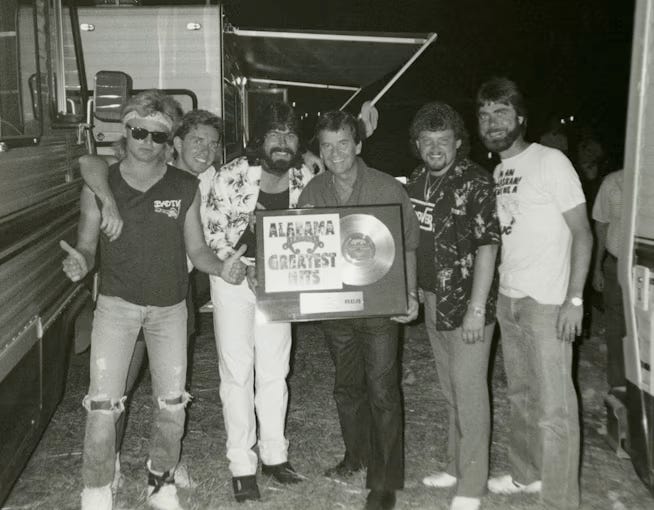
You have a reputation as a risk taker, such as your signing of Alabama before bands began winning as much attention as solo artists in country music. What would be the equivalent risks that might pay off in the business these days?
I don’t know how to answer that one. But when Alabama came up, it wasn’t like a red light came on that said, “Risk taker! Risk taker!” You move based on your belief in the music; that’s the operating principle we all go by every day, regardless of whether it’s Kenny Chesney or Sara Evans or whatever we do. You feel something and you take the shot.
You signed Alabama because you had a visceral reaction to their music, not because you were intrigued with the notion of pushing a new kind of act in country music.
Absolutely. We did the same thing when we signed K.T. [Oslin]. A 43-year-old woman from New York was not exactly what I would call the normal kind of signing in this format. We’ve also just signed a 37-year-old guy from Mississippi, Jeff Bates, a very traditional singer. He’s not what I would call the kind of artist who’s on the radio now, but we’re getting great reactions. That doesn’t mean this is a huge risk; we just liked what we heard and went after it.
You took a definite risk years ago, when you put out Hobo Carousel, an album by Charles John Cuarto that consisted entirely of poetry.
He happened to be an artist who just captivated me in terms of sitting down and reciting his poetry. It was a very low-cost record, so we took a shot at it … and we failed miserably. Poetry is not what we do.
####