
Kirk Whalum
Downbeat, July 2015

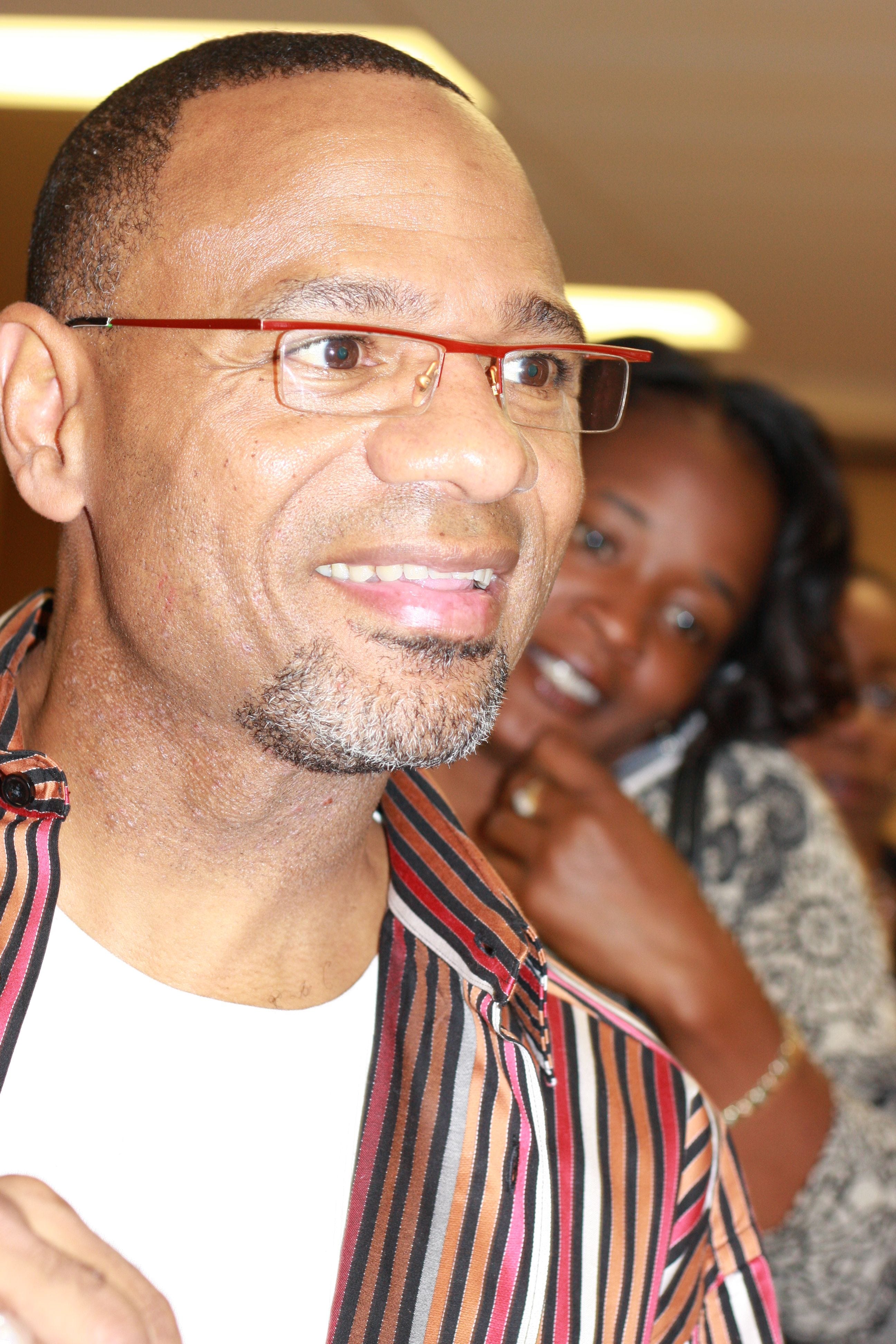
In the spring of 2015, Downbeat sent me to the Sony Tree Music studio on Nashville’s Music Row, where I spent the afternoon hanging out with Kirk Whalum. His career always interested me, in that he was a fully-equipped jazz saxophonist who opted to ride two currents. One was the often maligned smooth jazz school, where musicians trained on bebop or swing traded Charlie Parker licks for longer, slower flows of notes. The other current led him into Christian music, which was stylistically harder to define but not unrelated to the smooth aesthetic. In both worlds, the focus wasn’t so much on the performer’s virtuosity as on a greater idea, whether it be getting mellow or getting saved.
Given his background, this wasn’t an unexpected choice. Raised in Memphis, he was the son of a minister and the grandson of a music teacher. His lineage also included one uncle who distinguished himself as concert organist, composer and educator and another who spent decades as a singer, keyboardist and saxophonist with Miles Davis, Ella Fitzgerald and other jazz luminaries before making his recording debut at age 75, with nephew Kirk producing.
Inevitably, Kirk’s path was destined to lead him to the project we would discuss: the last in a series of releases titled The Gospel According to Jazz. While the idea of “family” was broadened in these sessions to include the universal family of faith, it was also more directly connected to what he considered an overdue acknowledgment of his kin specifically. We met in the studio, where Whalum, wearing a John Lennon t-shirt, was twiddling with Pro Tools and checking out mixes of a tune cut the previous day. After a minute, we headed to the break room to talk amidst vending machines and conversations that made it a less than ideal setting for subsequent transcription.
****
… I have an uncle who is 87. His name is Peanuts [birth name: Hugh]. He played with Nat Cole. He knew Roy Haynes and all these people back in the day. He was from Memphis but by then he was in St. Louis with Miles and all of those people. He really is a tenor player, and he plays trumpet, but he ended up doing the piano bar things because he has four kids and an amazing voice. He was under the spell of Nat Cole, so when you hear him sing, he’s got his own style but he can really make you think you’re sitting in a room with Nat Cole. But he basically did the lounge scene for sixty years. He opted for that. A lot of local hero-type musicians fit in that kind of mold. [David] Sanborn literally told me, “Man, your uncle is one of those people that I aspire to try to play like.”
So anyway, I look around. My brother is a great musician. He and I did a reimagining of the John Coltrane/Johnny Hartman record. My brother is a singer in the line of Marvin [Gaye]: very clear. He also does all that Bobby McFerrin body percussion. But more so, he’s got a really clear concept. It’s not “clever.”
My older brother is a [I think he says “saxophonist” but not sure], but he can also sing …
Is this a project for Peanuts, then?
No, it’s a family record. Peanuts is I guess my first example of the fact that, “Wow, this family actually has a long line of musicians!” Both of my brothers in essence are musicians; one of them is a pastor. Actually, all three of us are in the ministry. Just about six months ago, my younger brother accepted a calling to the ministry as well, although he’s not necessarily a pastor. Our older brother is a pastor.
My son is touring with Billy Currington. He’s a country musician. All my kids live here [in Nashville]. My son Kyle is a country songwriter. He writes some rock stuff, but he’s a great songwriter. I call him a real songwriter; I’m a hack [laughs]. His cousins, my older brother’s three boys, are all in music. One tours with Bruno Mars; my nephew was up there with him at the Super Bowl. The other tours with Ludacris and more so with Maxwell. And the other one is the singer on this song [playing over the studio speakers]. He’s in New York, trying to make his way. He’s very much a part of the club scene, the neo-disco kind of thing.
So I just kind of realized, man, I can’t let this slip away! They’re all already really good. I can’t always get them [unintelligible].
So they’re all on this record.
Everybody is on this record except for Peanuts. Now, we’re going to get him on here. He’s 87, so [unintelligible behind music playback]. My father was Kevin; he was a pastor. My brothers are Kenneth [unintelligible] Kevin -- KKK [laughs]. My brother’s kids are Kenneth [unintelligible]. And I was like, that’s it, so my youngest son is Evan. He’s a rapper but more so he studies film and he’s a photographer and videographer. He’s really on the visual arts side of things. He’s also incredibly good with his hands. He can build. He could build a studio if he needed to.
So I got it up my craw that we needed to do a Whalum record. This would be cool for me because I’d really shied away from that kind of “Whalum this and Whalum that.” I’ve always been sensitive to that. I grew up in the petit royaume -- in French, that means “little kingdom” -- of the church. Your whole life is basically centered around that church, culturally and socially. You become reactive to that, as preachers’ kids do. One way or another, you act out your rebellion to that while enjoying the benefits of it. You’re automatically assumed to be either a saint or a sinner, the extreme versions, because you’re the preacher’s kid.
So I never really wanted to do that. I never wanted to be a Whalum. I wanted to be a person. I wanted to travel and be a world citizen. I had a scholarship to study French in Paris. And when I got to Paris, I was like, I want to live here one day! I moved there later. I had a wife and four kids.
So anyway, wanting to be a world citizen and growing up in the microcosm of the church, I was willing to become apart from all that. Now, at this point, I’m 56, and I’m like, you know, we’ve got to do this. We have to document this. There’s not a lot of families I know where three generations have actually achieved some success. My grandmother was a very successful music teacher. She taught piano. She taught Hank Crawford! I mean, Hank Crawford told me, “Oh, man, your grandmother was my first music teacher!” My maternal grandmother was a gospel singer. My grandfather was an orator and a singer.
“You don’t choose music. Music chooses you.”
Do you have any close relatives who are not musical?
Only one of my four kids is a musician. So, yes, absolutely. My mother played piano as a kid and she ended up playing piano at my dad’s first church. It’s a joke now because she’s like, “I can’t believe I did that [laughs]!” I don’t think it’s something you have control over. I always say that you don’t choose music, music chooses you.
You know, the African spirituality that informs the black church culture is very big on ancestry. Africans pray to ancestors. They believe that ancestors are guides and are very much a part of what they do. So when we gathered together for this project, I prayed that we would tap into that. As Christians, yes, it’s absolutely about Jesus and God guiding and protecting and providing. But I’m a seminarian and that really kind of opened my head up to the ways that I would say American Christianity rejected these other streams. In America we just assume we’re the legitimate stream. But all the indigenous peoples who became Christians brought their spirituality into that.
So I really want to capitalize on the African part of it and tap into it, especially because this is a family project. They come here to America and they’re cut off in terms of, you can’t trace back any further than Virginia, you know? At least with DNA, I know my people are [maternally?] from Guinea-Bissau. But still, in terms of who actually did what, who knows? But you’ve got to just imagine that this stream of music, now that I see it in my kids and my nephews, it had to have been a long [unintelligible].
What is it like to see these generations interacting?
When you start with a familial attitude of mutual respect, and I guess the particular respect for your elders, on our side, the older guys, there’s a real excitement about, “How are you going to do this?” There really is a beautiful rapport.
Yesterday was officially the first day when we had a rehearsal. We did five songs. It was our first time to officially explore that. It was a little tentative. I’m like, I really think it’s gonna work because we all get along so well. And sure enough, even in those tense moments … because the studio is that place where “I got my idea, you got your idea, and then there’s the idea that’s gonna work.” There’s a natural tension sometimes, but even in that we love to be around each other.
Tension can be healthy if you’ve also got trust.
That’s so true, man! That’s a beautiful way of putting it. I’m gonna steal it!
[We move from the studio to the somewhat quieter break room.]
Singing On Sax
I come to the party from the Memphis-bred, i.e. soul/R&B musician. That was my primary influence and continues to be my forte. Really, I’m a gospel saxophone player. I’m more a singer on the saxophone. Luther Vandross told me, “I don’t like saxophone.” I’m thinking, “Oh, wow, I think I’m insulted” [laughs]. And then he said, “But I love you because you play like a singer.” And I just went from the lowest low to the highest high!
And you told him he sings like a saxophone.
Right [laughs]! So there’s that and then there’s the fact that I came to prominence at whatever level I have during the era of this anomaly called smooth-jazz radio. The radio format, which was a lark, somebody’s marketing idea, encompassed a whole lot of music. The very center of it was music that was conceptualized and perpetuated to be in the format. And I am guilty of writing and recording some stuff to get in there because if you could get airplay there, you could make a living as an instrumental artist. So my story started being told when that was the main avenue of exposure for someone like me. But it also included Joe Sample and Wilton Felder and David Sanborn, all these other musicians who are qualitatively jazz musicians. I mean, Bob James used to be musical director for Sarah Vaughan. He was in the New York jazz scene. It’s just that many of us were absolutely on the tail end of what was considered acoustic jazz as being the primary instrumental manifestation of popular music. That was over by the time I got in; it was electric by then. The rhythm section was going to reflect the times that we were in.
So now it’s like, “Hey, good news! We’ve got a place where we can get our music played. The bad news is that there’s some very creative distillation going on inside of the format, where they’re architecting it for a target audience.
You’ve said you’ve been guilty of writing and recording with that target in mind. Did that ever cause you to feel any conflict?
Yes, to answer your question. But a given vocation, even just a regular job, where you have some creative space, so you know there’s also the duty-bound aspect of commerce and at the end of the day this widget needs to fit in there, maybe subconsciously, except for a very small sect of people, we all collaborate with ourselves all day long, with the side of us that wants to have a nice home. The other side of us says, “Well, I want to do my thing.”
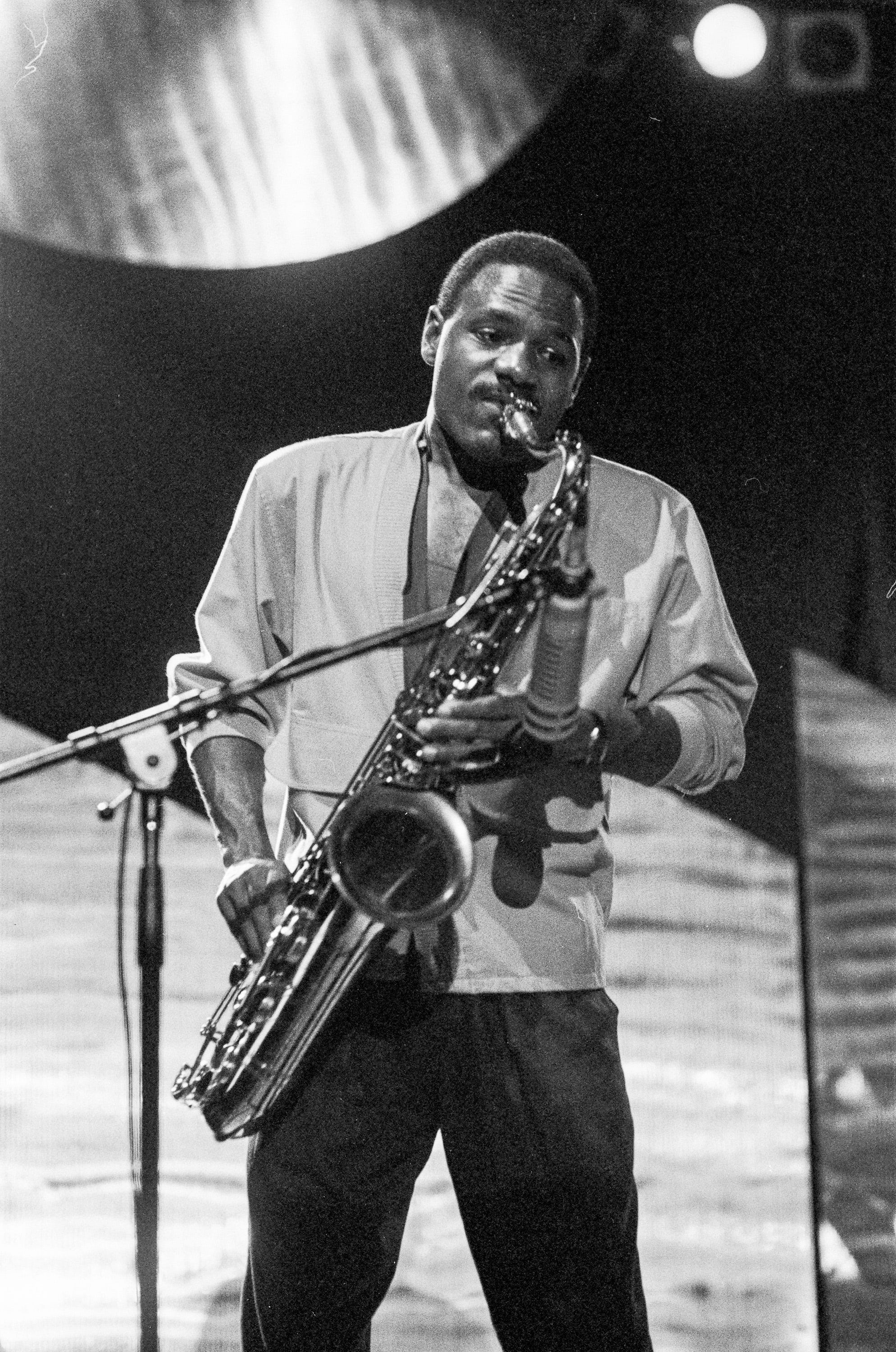
I will absolutely say that when I look back, yeah, I can listen to certain things and go, “I’d kind of like to forget that.” But I’ve been blessed because the preponderance of what I’ve been involved in is really musical. To me, that’s important, to be able to say whatever genre or sub-genre it fits in, that a person who really knows that particular genre can listen to it and say, “That’s great music.”
But you’ve never cut any music you didn’t believe in.
That is true. It is about the communication aspect of what I’m doing. When I put my horn in my mouth, I will categorically pray and ask God to give me the notes and the connection with these people that accomplish this higher goal. “Ascension,” which was a mainstream pop song by Maxwell that I recorded … and even that, right there, says we were going for pop airplay … I can say that I got in the studio and I played my heart out. I was trying to connect in the same way that Johnny Hodges was trying to connect, that Lester Young was trying to connect when he did a pop cover with Billie Holiday.
Speaking of that, a thought came into my mind. Probably the loveliest gig I’ve ever done was when I sort of played Lester Young in that sense for a multi-artist, huge-star Billie Holiday in London. I mean, Amy Winehouse, Chrissie Hynde, Dee Dee Bridgewater, just on and on … These ten or twelve artists got to do their favorite Billie Holiday songs.
I’ve never thought of Amy Winehouse and Billie Holiday in the same sentence, but they do share a real intensity in their performance.
It was so obvious to me. If you hear the angst, if you hear her connection to American music, the whole of it, with Donny Hathaway in particular to Billie Holiday … and it’s not unusual in England, the way they connect to our music.
The Cover Controversy
Anyway, there’s this age-old tension between recording music for the purpose of making art and doing your thing and recording music that will do well commercially. I just finished Miles’ autobiography, and I have more respect for him now than ever. He was pragmatic enough to say, “What’s the big deal? Who wouldn’t want more people to hear your music? If you can hook that thing in a way they can get their heads around it, it’s not a bad thing because at the end of the day, you still get to do you.”
And he cut standards that everybody knew, from the American songbook up to Michael Jackson’s “Human Nature.”
He did cover songs his whole career! That whole cover thing is another sticking point for me. The only Grammy I have is as a composer; I have eleven nominations as a horn player, or I guess technically it’s ten, and one as a composer, and that’s the only one I won. But I’ve always wanted to define what I present not just as my sound but also what I write. Not everybody has that luxury. Whitney Houston is a great example of a great singer who never wrote a song, I don’t believe.
And look at Tony Bennett.
And Frank Sinatra!
Well, he did write a few songs.
Yeah, but the songs the general public knows by him, I would venture to say most of them are covers. That having been said, the whole cover thing is about, what kind of music are you making? Is it good music? Was it Mozart’s dad who said, “Stay in touch and do good work.” That’s really the question. That’s more important.
Reaching listeners, then, is a critical part of your creative and performing process. When you write and arrange, is the audience always an intrinsic part of your work?
I don’t think I can say that. I still consider what I do to be primarily a spiritual thing.
And that is about reaching out.
Yes, and being both a conduit and a participant and a beneficiary of this thing that’s going on, that’s why improvisation is so important in what I do. I wouldn’t want to always be interpreting someone else’s melody. I want to spend my time between those two areas, where I’m interpreting but also coming from my heart and asking God to give me the right notes at that moment.
At the same time, there is that part of it that’s undeniable. I want to do well, financially too. That is a part of it. I mean, I like nice things [laughs]. I’m not hung up on them. I don’t even like the idea of a huge house because I get mad when I have to go twenty steps … I’d rather it all be right here!
“I’m not hyper-materialistic. But I do like the idea of doing well.”
You can be in only one room at a time.
So it’s not that. I’m not hyper-materialistic. But I do like the idea of doing well. I think there is a place for that. The difference between maybe the way I do music and … I have a particular musician in mind, I won’t mention him because I don’t want people to get the wrong idea because I am a huge fan of his. I know him. When I can, I connect with him. He’s a saxophone player. He’s primarily making music in college settings. He’s teaching in college. He’ll do the big bands in Germany. And he’s doing okay financially, but you can almost single him out from fifty or a hundred people doing what he does on that level technically and artistically, who are making a decent living. I’ll say he’s probably making a little more than a decent living, but no where near what he should be making.
Well, man, you could go down that lane if that’s where you feel comfortable. But I like doing well. I love playing for big festivals. I love playing music that is more accessible.
I don’t consider myself as somebody whose gift is to play with a lot of technique. Mike Brecker is an example. I hear him playing soulfully on these records every now and then, and I go, yeah, he has that. He even said to me, when we ran into each other, “Man, I love your sound. I love the way you play.” The first time he said that, it really took me back. I’m sitting here with the Man, and I’m like, “Show me something [laughs]!” But that helped me understand a little bit more about people’s gifts. He considered me to be iconic in the area of interpreting a melody soulfully, where people just connect to it. I consider him to be technically a freak of nature.
When it comes to The Gospel According to Jazz, I am able to juggle a little bit and stretch a little bit into these areas that I don’t know are necessarily my forte, but they are things I’ve always loved doing and I’ve always pursued, especially really solid technique and jazz improvisation, harmony, theory, arranging. These are things I studied in school and always wanted to accomplish.
Faith & Rebellion
When you were a child, was there ever a time where you rebelled, as you’ve said preachers’ kids do, and maybe music and faith were in some kind of conflict?
That’s a good question, but there never was for me. I owe that to my mom and dad, and specifically my dad. He never restricted my involvement in quote/unquote secular music.
As many ministers do.
As many, many ministers do -- and not only minister fathers but the ministers who have a fatherly impact on all the kids in the parish. He would make it clear to me, like, “You better not come in here smelling like this or like that, like you’ve been involved in this particular activity. But go hang [laughs].” Apparently, he knew intrinsically that I had to experience, to pursue music on a professional level on par with other professionals -- and that’s something I’m very big on. The educational aspect of what I do with The Gospel According to Jazz specifically for church musicians is to say, “It’s great that you’re in this bubble here, but that doesn’t change that a particular person -- John Coltrane -- is still there. You may not be looking at it right now because you’re in this bubble where everybody says you’re great.” So I’m grateful to my dad that I never had that conflict, not for a minute.
When was the seed planted that led you to conceive of the Gospel According to Jazz series?
I was touring with Jonathan Butler, George Duke and Rachelle Ferrell. It was basically pop/jazz, R&B music. Jonathan is the wild card. You never know what he’s going to do at any given moment, which is awesome. So he’d go into a hymn, and we’re joining him. And that was the biggest standing ovation we had on the tour. So then we started doing it every night -- we’re not crazy [laughs].
That stuck in my mind. There are other things I could mention in terms of my particular journey as a solo artist developing in clubs and later in festivals. I would always have a moment where I would always connect people to my particular faith tradition. But that happened.
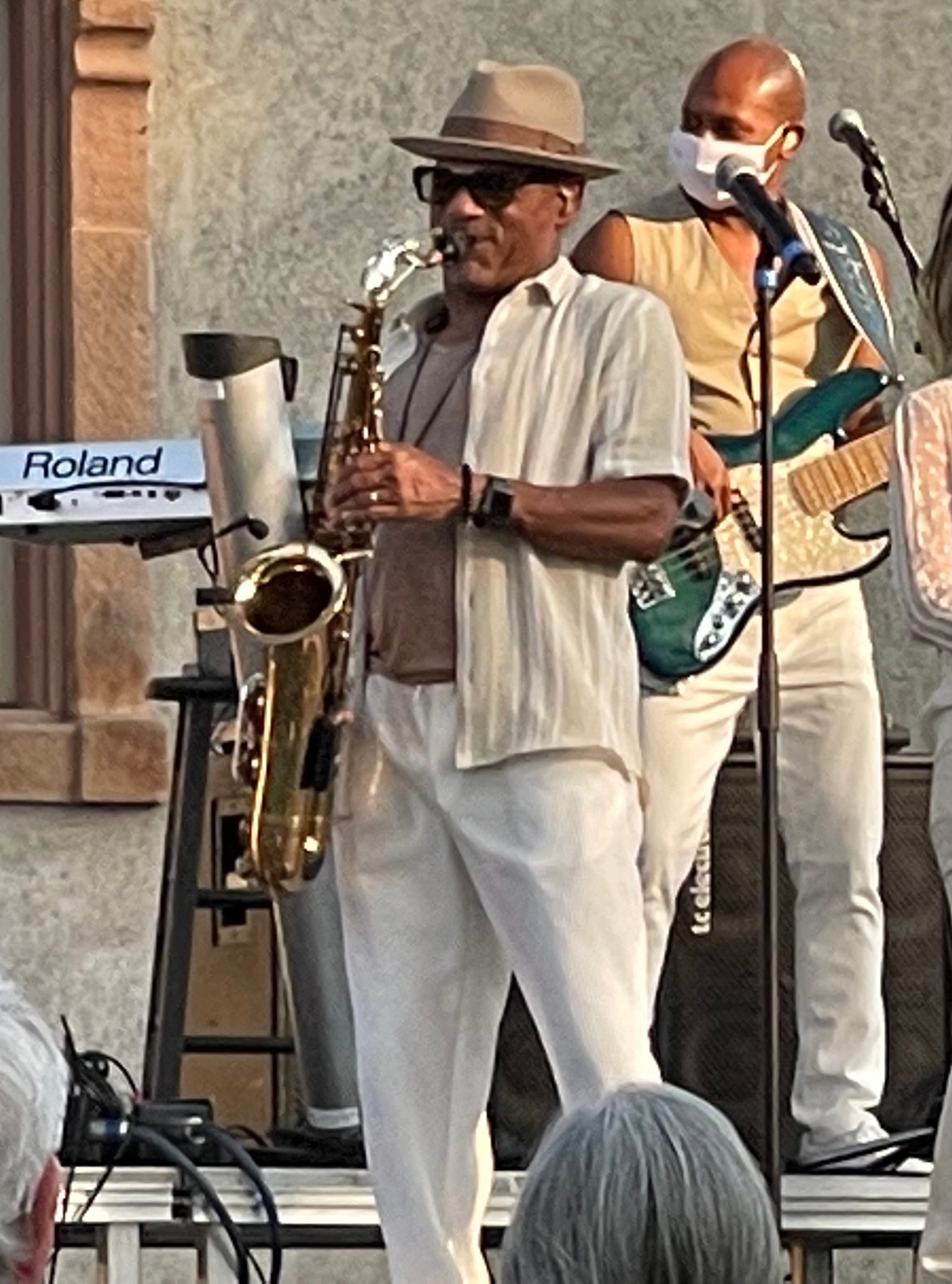
Now fast-forward. In ‘96 I get unceremoniously dropped from Columbia Records, where George Butler had signed me along with Harry Connick, Wynton Marsalis and a bunch of people as he was going to Miles’ house every day to get him to turn the lights on at least, let alone pick his trumpet up. The day I heard I was dropped, it was like the wind was out of my sails. My wife saw it. I grew up with my wife; fifteen and fourteen is when we met. At that moment, my childhood girlfriend looked me in my eyes and said, “What can you do today that you couldn’t do yesterday when you were at Columbia?” It came out so clearly, as if she had been pondering it in preparation for this moment. But I don’t think she did. I think it was God. I think it was one of those moments when a human being stood in God’s shoes. And my pity party went [Whalum makes a drooping noise.]
Sure enough, the first thought that came to my mind was of that [I think he says “situation” or “preparation”] where people in a quote/unquote secular context were not only willing but were elated that someone had the courage to present that and take the risk. It’s like, “Wait a minute. I paid to hear a concert. I didn’t pay to be preached to. If I’d wanted that, I’d have gone to a gospel concert.” So there was that tension we talked about in that moment where you’ve got to have some nerve.
And I knew that’s what I wanted to do. I wanted to pursue that. I mean, I continued to try to get a hit, as they say, but I also wanted to pursue that. That’s where The Gospel According to Jazz came from, out of a big disappointment.
When my manager and I started talking about it, he came up with that title. And I thought, what a great idea because the Gospel according to Luke is his perspective on this person in particular, these happenings around the life of Jesus. So how can I tell that story with a language that primarily doesn’t use words?
What is the process with each of these recordings? Does it start with picking the repertoire?
It doesn’t begin like that. It kind of rolls over into the next. I’m already thinking about Chapter 5 when I’m working on Chapter 4. I try just to not think too strategically about it. I think that’s part of being a right-brain person. I don’t want it to be too concept-driven or too linear. I would love to think that, looking back, you can say, “Okay, this is a snapshot of where you were. And this is how it ended up. And we can study it as if it was a progression.” Again, with Mozart or Brahms, we can look back and say, “Well, he must have been thinking so-and-so.” But I wonder, because the Esterhazys were paying for the music. Maybe it was because he needed to fulfill his contract. Who knows? But we can look back and analyze it.
For me it’s a lot more … I won’t say random, because I do believe that God is involved. I started out in my college career in composition. I was a comp major for a year because someone helped me realize, “Hey, you’re practicing saxophone all night in the practice room. But you’re a comp major. You’re not experimenting with this sound against that sound.” And the historically black college I went to didn’t even have an orchestra. It didn’t have a string quartet. So could I really be a comp major? So I thought maybe not. My heart of hearts is really as a player.
But The Gospel According to Jazz, the darndest thing is I get to stretch into all these areas on this quote/unquote gospel record. That’s where I get to be a jazz arranger. I get to improvise and stretch and take risks. I’m like, wow, how wonderful you are, God, that one of the gifts you had in mind for me all along was in the form of this letdown of being dropped from Columbia so I would have to venture out into some other areas.
Fast-forward, the stream that I get to be in that provides me, selfishly speaking, with all of these beautiful avenues to pursue and to spread my wings aren’t the areas I’d considered my forte or even pursued whole-heartedly. It’s more like something that kind of happened.
Do you put any creative restraints on yourself as you begin the process of reaching out through the music and performance of The Gospel According to Jazz?
I would add to your question that it’s not so much the multiplicity of what we have to offer but also the multiplicity of our existential reality as a culture. What we bring to the picture is the facilitation of expressing those things, whether it’s our technical training, our practicing or whatever. And it’s about us sharing this particular moment where we all get to consider all these things. It’s just that we can be unabashedly vertical and include God in the conversation, as opposed to be nervous about doing that. So I do feel strongly about that part of my playing, being able to really be real.
Creatively, I really don’t think, even subliminally, we’ve enforced any limitations. I will say we all have limitations. Maybe I’ll admit that we didn’t want to go too avant-garde.
You introduced “Triage” as a “dissonant piece,” when in fact it wasn’t really that dissonant at all. But within the context of the concert …
Exactly, and in the context of music in a church or a religious setting would naturally be exposed to. And the subject matter: To use your multiplicity word again, the multiplicity of what it means to be a human being in such a time as this. The Book of Esther talks about now she’s a queen in this pagan culture, but …
[Brief break in recording.]
… All of these things are we can look at and analyze. But for me it was more about, how can the record flow in that traditional A&R sense? But much more important was the narrative of starting with “Just As I Am,” like, not me, but you. Just as you are as you come to this music and more importantly as you come to God, the concept that there is a creator. Know that God is very persnickety about his reputation, or I should say “God’s reputation” because we know God is above gender. Having been besmirched to say, “Well, these people over here are not so [unintelligible].” The Bible has this dualism of Proverbs, the righteous of the wicked. No, no, no: God has created us all in God’s image and welcomes us.
“Radical Hospitality”
I took a class in seminary called “Radical Hospitality.” It changed my life in very real ways. This record is kind of a reflection of that. So I wanted to start with the coming to the picture naked, a homeless person that God says, “I’m so glad you finally came home!” The second song says “let ‘em in.” That has a double entendre for those who would stand at the gate as bouncers -- Holy Ghost bouncers [laughs], Kingdom Banquet bouncers. And God says, “Let ‘em in. You’re basically there to say ‘welcome.’ You’re not there to check anybody’s credentials,” which is a confusing point for many in the church because they feel like that’s their job, to make sure that if you’re living this lifestyle, don’t think you guys come in here. So let ‘em in.
And secondly, for those who are many times rightfully and understandably reticent about this whole God thing, like televangelists or a guy who gets on TV to raise money for his new jet -- “Send me a thousand dollars so I can buy a jet.” Okay, I get it. I understand it. I don’t blame you for being a little leery of this Kirk Whalum guy talking about the gospel according to whatever. But guess what? Let Him in. Consider letting God in. Maybe we can share this moment and maybe you’ll feel a little less apprehensive because we’re going to talk about some things you probably really care about. But let’s start this time we have together by saying “just as you are” and then “let him in.” We’ll go through this whole narrative of life and at the end of it, guess what? Nothing has changed. Love is still the answer.
I love to hear your thoughts on the sequence and how it’s put together, but for me, that was the main important thing, the theme of “welcome” at the beginning and the theme of “love is the answer” at the end.

Where did you get the idea of sending Rick Braun out into the audience to play a straightforward unaccompanied version of “Ave Maria”?
Isn’t that beautiful? We’ve played together a lot. I heard him do it on a cruise ship. We were playing on one of the smooth jazz cruises. I just thought it was so beautiful.
We’re doing a gospel cruise now, by the way. I would appreciate you mentioning that. I’m the host. It’s going to be kind of a new venture.
It was born out of the fact that on every single one of the, quote/unquote smooth jazz cruise and the straight-ahead jazz cruise, there is a gospel hour. I participated in them categorically. On the last one, Jonathan Butler led one. So Rich was on the gospel hour of the smooth jazz cruise. Again, speaking of this sacred consecrated moment in the middle of “we’re at the casino, we’re at the bar, we’re out dancing at the pool,” here’s a moment to complete the picture. We never turn that side off of us. It’s just that we’re sometimes not in touch with it. And so there is a moment where Rick brings us into that setting.
And by the way, that’s another thing. As a quote/unquote Protestant, who is a lot more Catholic than I’ve ever been, as in “Catholic equals universal,” and I love this new Pope, man, to consider Mary! [Note: Whalum converted to Catholicism in 2022,] That’s something that’s so new in my life. I’m sure the Catholics are saying, “Yeah, now you get it!” But, Mary, man! How incredible it must be to realize that you, as a peasant girl, are going to have God in person come out of your womb. It blows the mind. And her response, the way she dealt with this, was “be it done unto me according to thy word” (Luke 1:38) is so huge for me. The way that relates to women in our culture in this precarious and vulnerable position that many of them find themselves is that the courage of Mary and the beauty of her being so important and so unimportant at the same time.
“[King] David was arguably the greatest blues writer in history. I mean, the Psalms, are you kidding me?”
Let’s talk about “Caint Stay Blue.” Here’s where you open the door and bring blues into the picture. Why was that important in the context of this concert?
You know, Dave Brubeck made this statement about jazz: It’s about the individual lamentation, right? David was arguably the greatest blues writer in history. I mean, the Psalms, are you kidding me [laughs]?
So we just got through making this huge statement, and now we break and it’s like, “Now, tell us, what’s your day been like? What’s your week been like? What challenges are you dealing with at work? Where is the chaos in your mind?” You get inside that.
There is an educational aspect involved with what I do because many times I find myself in front of a lot of people who are church folks or gospel fans, who may not listen to Bessie Smith or know what blues is all about, especially in the context of jazz. And improvisation! For these people, it’s kind of new to listen differently from a quote/unquote sacred music. To hear the lamentations played out in this ethereal way, where you’re not speaking the language that people comprehend but you can kind of get inside this person’s story.
Frankly, I was fresh off of finishing a paper on Thomas Dorsey. I was like, “wow, this poor guy had to deal with all the abuse.” But now gospel people are like, “Now, that is real gospel music!” Really? Your grandfather was trying to have the guy tarred and feathered! So that blues music kind of loosens people up, especially because we’ll be playing in a lot of big churches.
We just played in the largest Presbyterian church in the country -- Hope Presbyterian in Memphis. And they were like, “Can you come back twice a year?” That was great!
Right before the final track on the album, you do an unaccompanied saxophone improvisation.
Actually, to be honest, that was the very first thing I did at the concert. It’s now the last thing on the record. Again, this is my expression of where I am with God and life. I’m just letting it out and then I go into “Just As I Am.” And then John [Stoddard, keyboards] starts playing with me.
On the last track, “Love Is The Answer,” you took out the bridge that was on the original record.
That was just an A&R thing. It’s a great bridge, and by the way I didn’t want to recreate this masterpiece that I had to re-familiarize myself. It had a saxophone in it, and I just hadn’t paid attention to that until I woke up one morning with that song on my mind. I don’t have a lot of God dreams like that, but that was one time that God apparently put something in my head. Because I’d never thought about that song! I never mentioned that song to anybody. And all of a sudden, in the middle of my writing and arranging process, that song comes into my head. So I bought it and I listened to it and I’m like, “Dang it, there’s a saxophone solo there!” There’s this whole kind of jazz aura to it.
I wanted to add it in a pop sensibility, to keep it more mainstream so people could have fun. There’s enough heavy stuff on the record.
Advice for Secular Musicians
At the risk of sounding arrogant, what would you say that mainstream jazz can learn from this sort of project?
That’s a great question. I think we can say in general that maybe it’s a nudge to be okay with your spirituality. And it’s a further nudge if you identify with the Jesus of the Bible to be unabashed about that. There’s a way to do that that acknowledges, respects and celebrates other people’s faith traditions and that’s not so arrogant -- I’m glad you used that word. I think a lot of Christian music is arrogant. I think a lot of Christianity is arrogant.
Holier than thou?
Exactly, but again that comes from a dualistic way of looking at life: You’re in or out. Maybe another encouragement to jazz musicians is to just not be afraid to go there and to say “I am not dependent on my technique at this moment. I am not necessarily connecting with the jazz greats technically,” because that’s an important theme for jazz musicians: “I’m in this continuum of great musicians.” You’re connecting, but you’re connecting with their vulnerable side. You’re connecting with their spiritual side. And it’s okay. People relate to your vulnerability in this moment and your courage, just like the other day in Kenya: “Are you Christian?” “Yes, I am.” [Whalum imitates a gunshot.]
It’s also a not so gentle nudge of, where do you stand? Are you willing to take a stand? Now, your taking a stand is going to rub some people the wrong way by nature. And that’s a good thing. Miles embraced that. But nonetheless, I think it’s good for you to maybe revisit that part of your life and say, “Have you really considered the claims of Christ, devoid of or maybe divorced from the cultural issues that can come into the picture and just say Christ alone as savior, as redeemer, as friend, as king of glory? Are you willing to be unashamedly Christian through your art?”
And then for the other person who says, “Well, maybe I’m not a Christian, but I am willing to acknowledge the divine, the creator, and to at least make a statement and to go there.”
####