
Miriam Makeba
SonicNet, May 5, 2000

While most of the people I knew were celebrating the arrival of the New Millennium without a Y2K infrastructure catastrophe, I was marooned in Ann Arbor, where my job with Allmusic.com had just disappeared.
Prophetically, one year earlier, my former colleague at GPI Publications, Jas Obrecht, had offered me that job on hearing that my previous gig as editor of Musician Magazine had vanished. Jas was working at the time with the website’s founder and CEO, Michael Erlewine, to launch the Allmusic Zine, which they envisioned as an adjunct to the site’s determination to post reviews of every album ever released. The idea was that as volunteers, mostly University of Michigan students, sat in booths on the third floor of our office on East Liberty Street, typing out first impressions of new CDs for I think ten dollars a pop, I would join Jas and Thom Jurek, our team of presumed experts in composing more thoughtful articles one floor below.
You’ll recall that in 2000 online culture was in its early stages of transforming our world. People talked about it then much as we fixate on AI now, with wonder and dread. It hadn’t quite sunk in that this revolution would be financed by the elimination of gatekeepers; in the music business, that meant that celebrity journalists would gradually lose their cachet to countless anonymous and self-styled authorities equipped with a computer and some time to spare. It was during this time that one of the more respected critics – it was either Dave Marsh or Charles M. Young – told me that he had just been dismissed as regular contributors to Playboy, which I presume realized that their bylines meant little to an emerging generation that hadn’t been taught to revere so-called marquee writers.
That gig in Ann Arbor bought me a year to catch my breath before internal squabbles brought the Zine to an inglorious end. After a day or two of feeling sorry for myself, I then started scrambling for another job. It quickly became clear that the same online revolution that helped launch the Zine had whittled down the number of salaried positions in the print world. Apparently I wasn’t the only one adrift; I still remember the publisher of a magazine I’d queried in Los Angeles telling me over the phone, “I never thought I’d say this to Bob Doerschuk, but I’ve got to give this position to …” And he mentioned a name you would probably recognize – or at least your parents would – whose credentials were just a bit more stellar.
I also remember seeing an ad on a journalist-for-hire website for an editor at a monthly for dog owners. As a lifetime lover of all things canine, I figured I’d give it a shot. Although I’d never written anything about any animals other than my own species, I did have plenty of clippings and testimonials confirming that I did know what it took to put together a new issue every four weeks. But after a short while, the publisher called me up with the bad news. “Listen,” he said, with what sounded like real empathy, “you’ve got plenty of qualifications, but I’ve got to hire someone with experience in dog journalism.”
That was the first and last time I’d ever heard that there was such a thing as a dog journalist.
Anyway, it began to dawn on me that I’d do better to focus on other prospects to pay my bills until I found a full-time editorial position. (Which wouldn’t happen until the Country Music Association hired me five or six years later.) There were only two options before me. One was to take a “real job,” which I began to pursue. As an example, I was buying some wine at a liquor store on the west side of town. The clerk was eager to help. “Is this a gift?” he asked. “Can I wrap it for you?” As he swaddled the bottle in festive paper, I ventured that he seemed to know his trade well. How long had he been working retail?
“I’m actually brand new at this,” he answered while tying a red bow below the cork.
“Really? Where did you work before?”
“I was an advertising executive at The Tennessean, until they laid me off a few weeks ago. This was the first place that agreed to hire me after that.”
We commiserated a bit. Then I figured I’d ask. “Are they still hiring here?”
He sized me up sympathetically. “Yeah, but they wouldn’t take you. They need someone who can carry full cases up from the cellar or off of the delivery truck.” No need to add that muscular dockwork was not in my wheelhouse.
That left my second option, which was to chase after freelance writing assignments. Though I knew plenty of folks who did exactly that for a living, as they had petitioned me for work since I took the helm at Musician, actually doing what they did kind of terrified me. To me, the difference between staff employees and freelancers is that the former are like acrobats working with a net, and the latter either have no such a buffer as they float from one trapeze to the next.
So that’s what I did. At that time, we veterans of print (who proudly labeled ourselves “ink-stained wretches”) could survey the digital landscape and see what looked like a garden abloom with music websites, each one thirsty for content. (Only later did we realize that most of them were either mirages or scrawny scrubs, starved of income.) However, I did hear that one of the more promising new ventures was hiring.
SonicNet had been assembling some of the top music writers into an all-star editorial lineup, with each member specializing in one particular genre. My hope was to be put in charge of the jazz beat, but I believe the estimable Gene Santoro had already grabbed that prize. In fact, there was only one opening yet to be filled: World Music. Despite my having only a casual awareness of what it meant and where to hunt for news, I said with feigned confidence that sure, I’d take charge and start getting stories together immediately.
Desperation is a great motivator, so I did learn a fair amount about world music, which basically means every kind of music in the world except maybe pop, hip-hop, jazz, folk and American country. What remained was about as broad a field as one could imagine, which actually made it kind of fun for me to dive in and learn.
During the few months I was onboard at SonicNet, I worked ouf of my bedroom in Ann Arbor. Aside from periodic staff meetings by phone, we were left to our own devices. Looking back, I’m reasonably happy with what I accomplished. I don’t have my complete archive, but I do have a few pieces I had the wherewithal to print out and file. These included a report on the re-release of four Brazilian albums on David Byrne’s Luaka Bop catalog, a new weekly radio show that presented obscure recordings from as far back as the 1890s, the debut of a Nordic Music Festival in Minneapolis and my biggest scoop: a preview of the “Native American Music” category about to be launched by NARAS for their Grammy Awards.
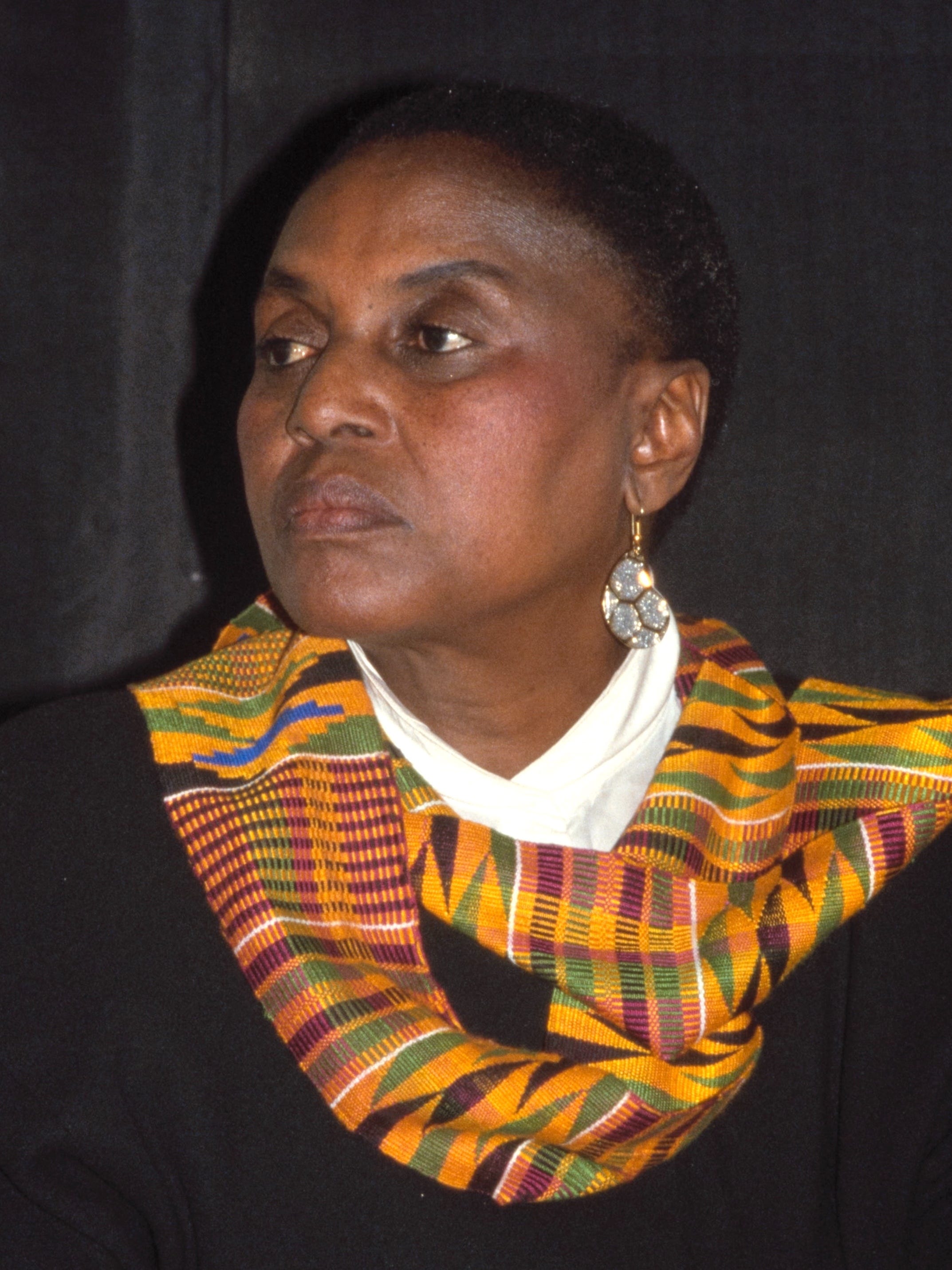
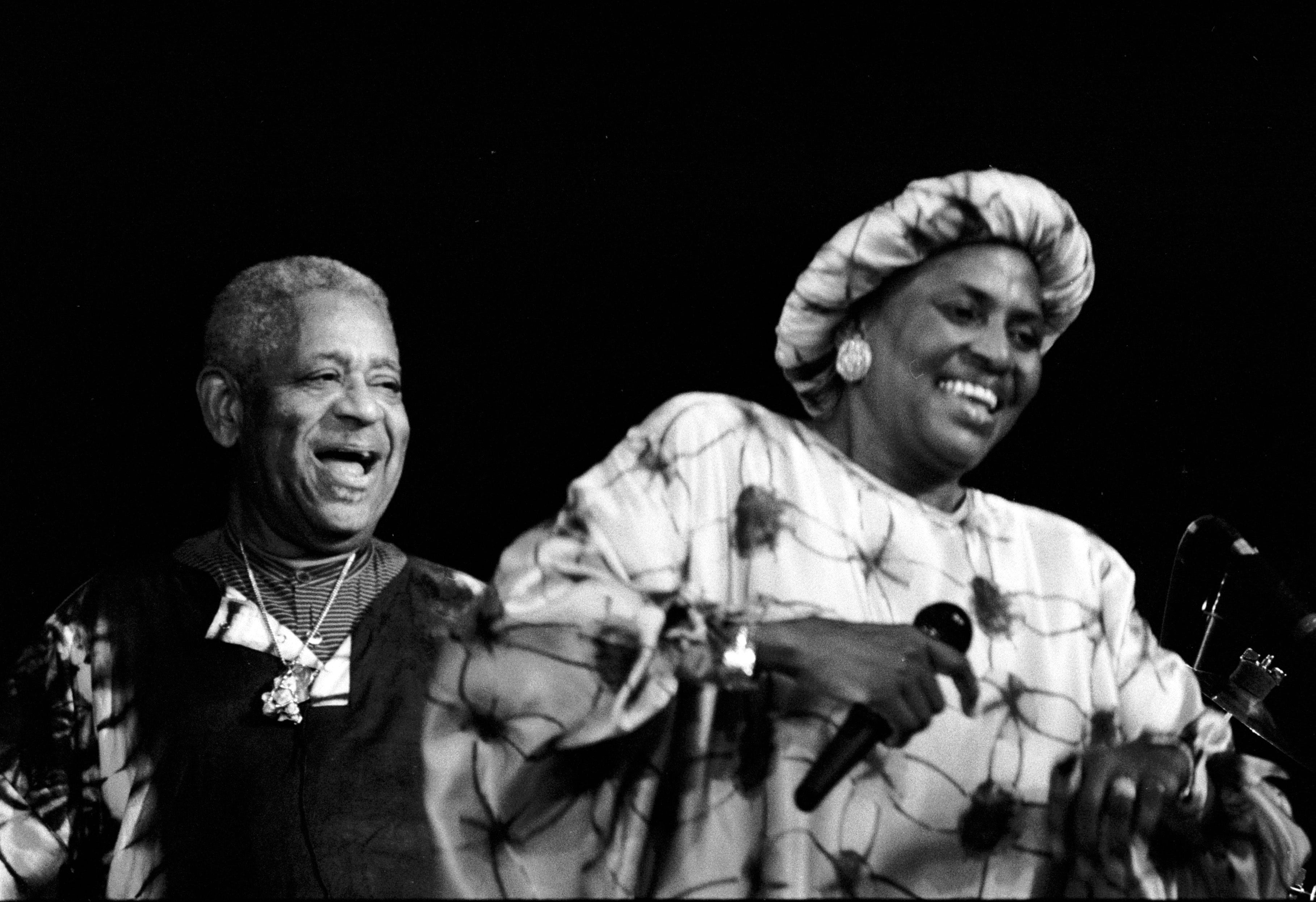
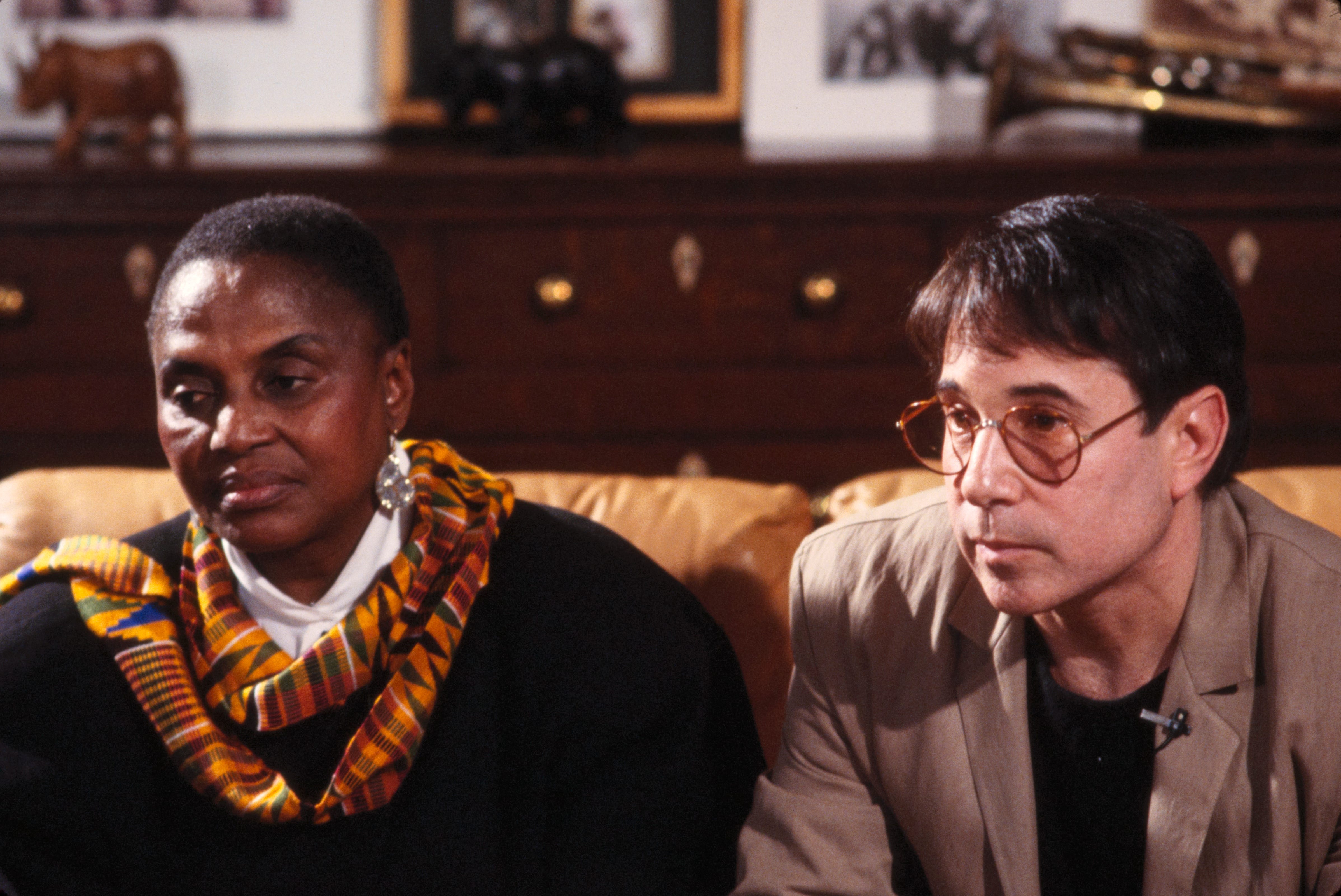
All of this was straight-ahead, Journalism 101 stuff. The artist profiles were harder because I wasn’t expert enough to fit them into the context SonicNet wanted me to establish. The only one of these whose transcript survives in my archive was with Miriam Makeba. Rather than recite her massive accomplishments as a vocalist and ambassador for music without borders, I’ll just say here that my plan was to go with what I knew best about her – specifically, her upcoming new album. Putting interviews together based on new albums had become second nature, especially in writing PR bios. But Makeba deserved more than that. Her interrogator should have been as steeped in her historic and artistic significance as I was on just that new project. And I wasn’t that guy.
However, I want to be as transparent as my ego and propriety allow here, so consider this an example of pro forma, short-form journalism. It’s embarrassing to see that every reference to her other recordings came from her, none from me. But I did manage to pose some broader questions about the importance of “world music,” which she answered graciously. And, as we all learned with time, online journalism works best when it’s short and tightly focused.
****
Has the world music phenomenon allowed you to learn about cultures you might not otherwise have gotten to know?
I’ve always been open to other cultures. Always. That’s why I always try to include in my shows music from other countries. I’ve sung in the Indonesian language. I have tried to sing in Spanish. I have sung some songs from Brazil.
So for me, it’s not anything new. But when we talk about “world music,” I get very confused by this word. There’s only one world in which we all live, so at the beginning I really didn’t get it when they said that some of us are “world music.” Well, what are the others? Which world do they come from? We all sing music, and all of it comes from this world. The term has been used so much referring to us people from Africa, people from South America. So I guess they mean “third world.” And that’s okay. Since it has caught on, I now understand that when they said “world music,” they were talking about us.
How did you develop your open perspective about different cultures?
My country is cosmopolitan. We’ve had people from Holland, people from England, people from around the world, living in our country for forty decades. White people came to South Africa some four hundred years ago, so we’ve always had these different cultures and languages, shall I say, imposed on us. It’s nothing new to us.
So you had much more opportunity to learn about these things than, say, an American raised to speak one language and listen to nothing but rock & roll.
I guess so, but there should have been a wider understanding and much openness to different things. Even here [in the United States], there were people from South America. This country had Spanish-speaking people. But it takes people to be interested in something for them to learn about it. There was probably no interest in learning other people’s languages or music or whatever. There is not, thank God.
How does the language in which you’re singing affect your interpretation of a song?
When I sing an African song, I’m much more at ease because it’s a language that I know and understand. But there are other languages that I don’t speak, and I try to sing in those languages. For instance, I sing in Lingala, but I don’t speak Lingala. I sing in Swahili, but I don’t speak it. I try! I try my best. I’m probably much more at ease singing in any South African language, but there’s no harm in trying. And being that English is the working language in our country, we learn English in school, we speak English when we have to, and I’m at ease with that. I’ve had to learn French when I went to stay in French-speaking Africa, in Guinea, so now I can speak French and I can also sing in French.
What about Spanish?
I don’t speak it, but I did try to sing one or two songs in Spanish. I will never sing it as it should be, because these are not languages that I speak. But I always find it fascinating to try to sing in different languages and to learn other people’s music. It makes you have a better understanding of other people.
When you sing in a language that you don’t speak, do you learn the meanings of the lyrics?
You have to learn the meaning of a song to be able to feel and interpret a song. You must have an idea of what it is about, even if you don’t know it word for word. Of course, I write it phonetically, the way I hear it, so that the pronunciation should be as close as possible to the original.
Has American pop culture had a strong impact on the values you were raised on in South Africa?
Not only in South Africa. Go anywhere in the world and you’ll find the use of American influence. This country has a long hand, you know? Where can you go without finding a McDonald’s? At home I think it’s a little bit too much, because ninety-nine percent of the time on our radio and TV you just hear American music and see American films. It’s a big struggle to keep the children from being influenced by that, and it’s a big struggle to teach them that they also do have a culture.
So American pop culture is mainly a negative influence?
I don’t say that our children should not listen to other people’s culture. But when that happens to the detriment of your own culture, it becomes a problem.
On Homeland, your new album, there are obvious Western influences. The song “Unhome,” for example, has almost a jazz feel.
That is a traditional song from Swaziland. It’s a lament about a girl who is married and going to her new home, which is the husband’s home. They paid a dowry. Then when you go, you go with another young lady who accompanies you to get acquainted with your new environment. In that case, the husband falls in love with the other girl. Then she has a dilemma: She cannot go back, with a fear of dishonoring her parents, who have already taken a dowry for her. She doesn’t know what to do, so she sings this lament. When you say it has a jazz sound, the pianist who played it is a really wonderful musician from home by the name of Themba Mkhzib, and he is a jazz musician. Then again, they say that jazz comes from the traditional music of Africa.
You move even more into Western pop music conventions on Homeland, with commercial song structures and synthesizer-based ballads.
You know, to me, it’s not a new thing to sing with Western influence. I did an album right here in America in 1965. It’s called The Magic of Makeba. If you listen to that album, every song I did with a big orchestra. A lot of people don’t know that I sang with an orchestra, because the album didn’t get widely distributed. Even then, when I first came in, I had an acoustic guitar, conga drums and acoustic bass. But sounds change, and if you want to sell records, the record company will want you to change, and you do the familiar thing. So I can still sing with an acoustic guitar and an acoustic bass if I have to, but if you want to live in this world, you’re supposed to change with it but not change your own style. I can have electronic instruments, but the voice and that style are still me.
You’ve also made at least one video for the new album. Was this a new process for you?
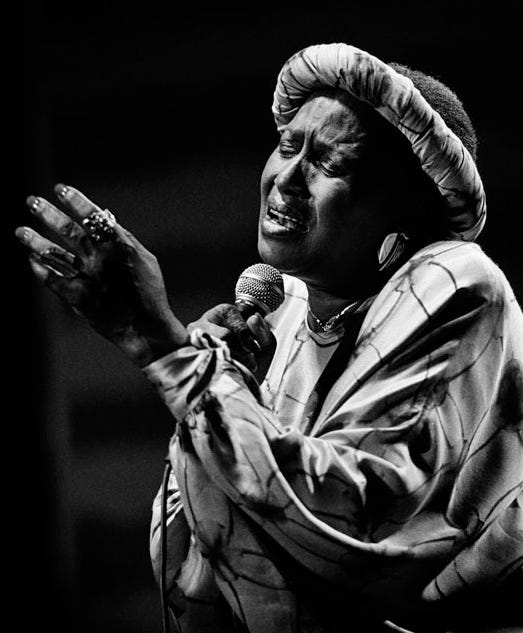
My album Walela had two videos. Before that, the album Sangoma, which has only a cappella songs, also had two videos. I don’t enjoy filming. If they are photographing me, that’s okay. When I have to do things over and over again, I don’t enjoy it very much. I don’t think I should be a film star [laughs]. I just like going onstage and singing.
####