

Six years had passed since I left my gig at Keyboard Magazine to pick up the editorial reins at Musician Magazine. And it had been three years since Billboard Publications pulled the plug on Musician, leaving me adrift in the cold currents of freelance writing for the first time.
That’s when Ernie Rideout, who was editing Keyboard, called with what would be my final assignment from Keyboard. Even before I picked up the phone, I was pretty sure I knew why. A few weeks earlier, the incomparable Ray Charles had died. Having interviewed Ray back in 1994, I guess I was the best choice in Ernie’s Rolodex to write an appreciation of all he had achieved, which was nothing less than to exert a greater influence than any other American has done on popular music.
Eventually I came up with a lead that put Ray’s importance in a context that I haven’t seen addressed anywhere else. Just ten days after Ray’s death, I heard that Marlon Brando had also passed. In that instant, my theme came to me. Like Ray, Brando was a revolutionary. His impact on the theater paralleled Ray’s in music. In a minute, I had my lead:
“An accident of chronology makes the point clear: Ray Charles, who died on June 30 this year, and Marlon Brando, whose passing came ten days later, followed parallel paths in changing their respective arts forever.
“Consider: Brando blew the cobwebs out of acting. He did it by shifting the focus away from what had become tired conventions of performance – crispy articulated dialog, relatively wooden blocking – toward something more dangerous: the artist’s own temperament, down to its most secret wells of violence, sadness and sexuality.
“Ray Charles did exactly the same thing.”
The rest of the story rode that current to its conclusion.
But more was needed. To underscore what Ray meant to our readership specifically, I called a variety of artists who had worked with, learned from or just been bowled over by his work. My transcripts of these interviews are below, with Marian McPartland describing his guest appearance on her Piano Jazz radio show, Paul Shaffer explaining how he accompanied Ray on Late Night with David Letterman, Bruce Hornsby on how it felt to be upstaged by one of his heroes, Nashville studio keyboardist Bobby Wood on recording country tracks with Ray, and Ernest Vantrease, who had a long run as music director backup in Ray’s band. All four insights, taken together, provide a perspective that, at least to me, brings the artistry and humanity of Ray Charles into a tighter focus.
(My transcribed interview with Ray himself will follow here shortly.)
****
Marian McPartland
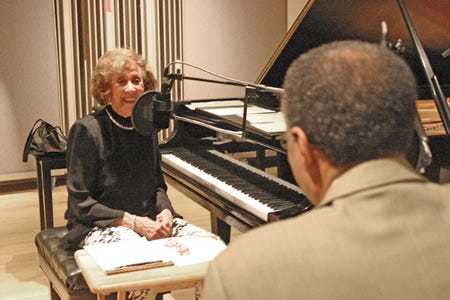
What impressed you about Ray Charles when you first heard him?
I guess I didn’t think so much of him as a piano player because sometimes he played organ. Most of the times I heard him he’d accompany himself as he’d sing. I didn’t really think of him that much as a piano player. I never really heard him play piano alone until he was on Piano Jazz, and then he really branched out and played beautiful chords. He actually played two or three tunes before he sang a tune, and I just loved the way he played. It didn’t matter that he always sang the same songs. I just loved the way he did “America the Beautiful.” I could follow him along with every phrase. He was just a unique person. Every time he came on I stopped to listen, whatever I was doing.
Did you know him well when you invited him onto the show?
No, I didn’t know him at all. Matter of fact, it was really funny. Ray was appearing with a small group at the Blue Note, and Shari Hutchinson and I decided to go down there and see the show and try to meet him. It was hard. We stood in line, just like anybody else. We finally went in and saw the show. Right afterwards, I ran upstairs to the dressing room. I had a copy of the George Shearing cassette in my hand. As I went into the dressing room, he was just coming out, and he greeted me like a long-lost friend, although he’d never met me. I said, “I really want to ask you about my radio show. I don’t know if you’ve heard it.” “Oh, sure, honey! I’ve heard it!” “I want to give you this tape because I thought it might give you some idea of what we do on the show.” “Sure, honey!” He put the cassette in his pocket. He was very friendly. He gave me a big kiss: “Sure, honey! I’d love to do the show.” I felt like he couldn’t wait to get rid of me. He kept on walking, wherever he was going. Shari and I left. We figured that was the best we could do.
About two months later I got a call from Joe Abrams. “Ray would really like to do your show.” I was flabbergasted. I had no idea that he really paid attention to me and that he had listened to the cassette I gave him. In fact, I still don’t know if he did listen to it. But that’s how we set up the date for the show.
Did you prepare for the show by listening to his music in some detail?
No, I didn’t listen to anything. I knew what I was going to talk about. Funnily enough, he just started off fooling around at the piano, and I let him handle it his way. I forget what tunes he played — “Yesterdays” or something — but he really got into it and played a wonderful arrangement. We talked a little bit and then he did another piano tune. And then he did another one. I said, “Well, are you going to sing one?” “Sure, honey.” He sang, I guess, “Georgia.” I haven’t really listened to the show lately, so I can’t remember what order things came in. But we talked a lot. We played some blues. I told him how I’d always been curious about how he managed to do everything sometimes behind the beat and sometimes he’d sing in front of the beat. We talked about that a lot. I talked about how I loved the way he did “Rudolph the Red-Nosed reindeer” as “Red-no reindeer.” There was a lot of laughing and carrying on. During the show I did a portrait, an original improvised portrait. At the end of everything he said, “Oh, I like that!” I don’t have to go through it bit by bit, but that’s how it was.
Most people are used to hearing Ray perform with a string section or a big band. What did you hear from his solo playing that isn’t evident in larger formats?
He played very full chords, beautiful harmony. He wasn’t terribly technical but he did beautiful chords. I was actually pleased that he played some piano. We did a couple of duets. Then I asked him if I could play one for him. It’s terrible, I can’t remember what I did.
Unlike many great jazz artists, Ray was a celebrity of the highest order. Did he seem at all closed off?
Oh, no. He was very simple. There was no entourage. I think he came by himself. I can’t remember where we were, but I think he had a car bring him over.
Did you see him again after the show?
No. He went off to wherever he was going. We were very friendly, hugging and kissing. He liked that a lot.
Bobby Wood
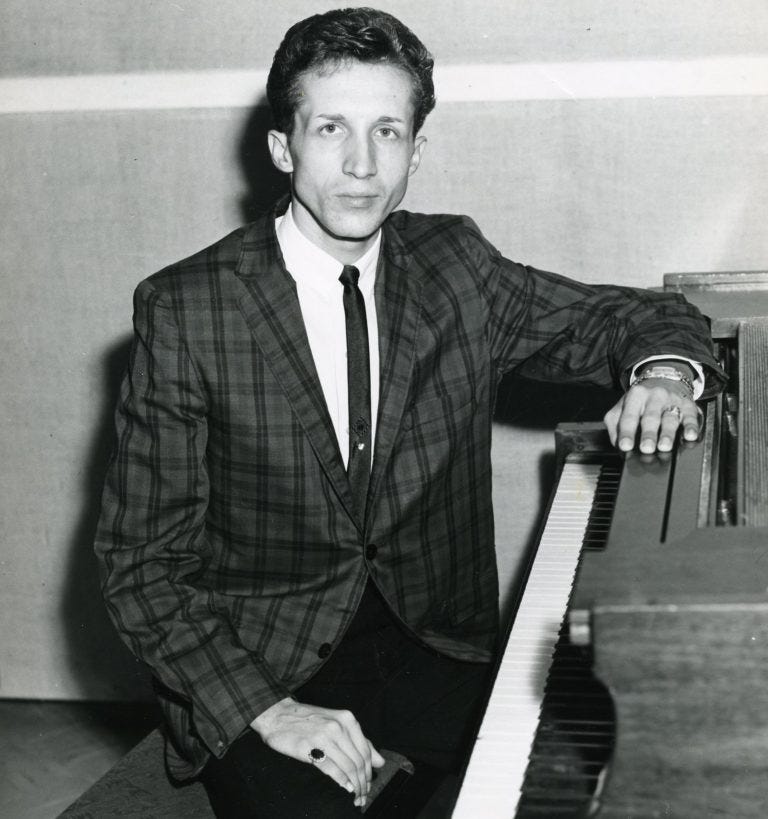
You recorded with Ray Charles back in ‘84. How did you get the call to do that session?
Gosh, I don’t remember that, because I worked so many sessions back then -- four sessions a day. I guess it was booked as Ray Charles and Willie Nelson and whoever. I believe that whole week that we were booked it was a different artist every day.
But you knew in advance that this was Ray doing duos with these other guys. Were you excited about doing a session with him?
Oh, yeah. My wife and I dated and danced to the music of Ray Charles when we were going together. I’ve been married to her for forty years. Of course, I used to play in clubs in Memphis, and we used to dance all night long to “I Can’t Stop Loving You,” “Take These Chains,” “Hit the Road, Jack,” and all that stuff. It was just a great time for music.
As you were listening to those records, were you focusing on how he played the keyboard?
I don’t think any keyboard player didn’t listen. He had such a great style. It was so soulful. It wasn’t real busy. I kind of grew up on Allen Toussaint; he was one of my favorite keyboard players. And Ray was in that same funky bag that I really liked. The country songs were incredible too -- and I wasn’t a country fan back then, I was more of a rock & roll fan. But he took those songs to a new level.
“He took the twang out of country and put soul in its place.” – Bobby Wood
You were brought toward country music in part by Ray Charles.
That’s true, because he took the twang out of country and put soul in its place. I was playing R&B and rock & roll back then, and that just brought me around.
How did you get to know Ray for the session?
Billy Sherrill usually hired an extra keyboard player, because when the Rhodes piano came in it took the place of the vibes. They usually had a utility man playing vibes on the sessions back in the fifties and sixties. The Rhodes took the place of that. I was hired either on Rhodes or acoustic piano for Sherrill. That’s how I worked on probably twelve or thirteen years of his sessions, and that just happened to be one of them. I remember one instance in one of these songs we did, I’m not sure which one it was, where Ray put this jazz chord right in the middle of it. I didn’t have a clue what he was playing; it was a two-handed deal. So I just turned around and leaned over and said, “What are you doing there, man?” Of course, he could be kind of forceful about what he wanted a person to play. So once I saw what he was doing, I waited for that time, and when it came I nailed it. And he said, “Yeah, baby! That’s right! That’s right, baby!”
Were you on all the Friendship duo sessions?
No, I was only on a couple of them. I possibly could have been booked during the other ones. Pig Robbins worked a lot of those things. Pig most always played acoustic. I was usually hired for Rhodes, and then when Pig wasn’t there I moved over to acoustic. I don’t remember who the other person was. It might have been Hank Jr.
What was the vibe like in the studio with Ray?
He went by the feel of things. The chord thing was the only thing he was pretty adamant about. I don’t think Billy Sherrill liked the chord because it was out of the box for what we were doing. Sherrill might have been right that time …
… but Ray Charles was the artist, so he could play whatever he wanted.
That’s right. Ray was great. He was one of my heroes, so I felt I was fortunate to be on the session. I actually had my picture made with him. I tell you, I was shocked when I’d heard he had passed away. I didn’t even know he was sick.
How did you learn the tunes?
They were simple songs. We very seldom had to write the actual chords to anything, unless it was too far out.
How did you and he set up? Could you look at what he was playing?
Kind of, yeah. I had my back to him, but I could turn around. I was at the right end of the piano with the Rhodes, three or four feet away. The keyboards were set up together.
Did he overdub the vocals later?
I don’t remember. We usually did the session and then it was off to another studio for the next one.
How did you fit into the piano part when you were doing the Rhodes part?
I always thought like I was playing vibes. You remember the old records that have vibes on them? I thought like that and maybe a little bit bluesy. I remember one song, I forget the name of it, but there was a diminished chord that came from the top, and I walked it two octaves down, playing all the notes like a run. I think it was on the George Jones section. When I heard it back Sherrill had overdubbed the string playing exactly that same run. I said, “Whoa, that’s pretty cool.” There was probably only one piano player in this town that I had a hard time working with, and I won’t call any names, but I worked well with 99.9 percent of every keyboard player in town, back when there were two keyboards on a session.
There is an art to playing two keyboards.
Yeah, there is. I learned this back in the Memphis days because there were two keyboards on all of those sessions. If one was playing on ones and threes or something, the other person would maybe play on twos and fours, just to stay out of the way. You never want to get on top of each other.
So you never actually talked over parts on the session with Ray?
No, we didn’t even know what we were going to cut until we got to the studio. I guess they hired me because I did stay out of people’s way. I was good at hidin’, man [laughs].
Ernest Vantrease
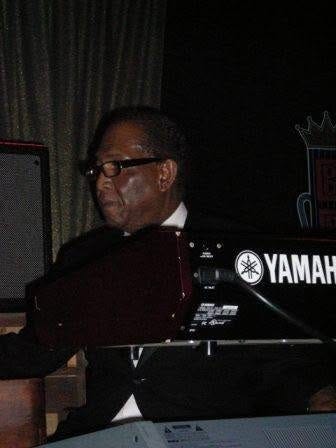
Do you go by Ernest or Ernie?
Both. Where I live in Tennessee, everybody calls me Ernest. But when I was working with Buddy Rich’s band and other groups, folks sometimes called me Ernie. They would also call me Jake and also the Deacon; that’s what Mr. Charles used to call me.
He gave you that name?
Yes.
Where did that come from?
I really don’t know. When I joined the band that’s just what he always called me. That was back in 1974, when I’d just joined Ray Charles’s band.
Did he have nicknames for everybody in the band?
No, he didn’t have any other name except me. I was the only one who had a nickname from him.
How long were you with the band?
I was with the band until last year, when he passed away. I was off the band for about five years; during that time I was Buddy Rich’s piano player.
Ray played piano and Rhodes onstage. What did you play with him?
When I joined his band I played the acoustic piano and the Rhodes. He would bring me out on a segment called “The Deacon.” I would end up playing a solo on one of the last songs -- the chaser, when he was leaving the stage. I’d be playing the organ during his segment of the show, and then he’d bring me over and I’d play the Rhodes. During that segment it would be the acoustic piano, the organ, and the Rhodes.
You played a B-3?
Right.
How did you get the gig?
It was an audition. Calvin Keys, the guitar player, is a great friend of mine; we worked together at that time with Oscar Brown Jr. He was also starting work with Ray Charles. Ray Charles needed a keyboard player, so Calvin asked me if I wanted to come over and audition. I did, Ray Charles liked it, and he hired me on the spot.
What did you do in the audition?
I was reading charts. It was a big band. Every year, before his tour would begin, for about two weeks he would have auditions with new guys coming in, if there were any older guys going out. I came in and auditioned like everybody else.
What was that story you were about to tell at the beginning?
When I was a bandleader in 1975, ‘76, somewhere in there, I would go in to get the list of the songs for that particular night. A lot of times I’d have a song on my mind. I’d be thinking about a song. And he would call that song every time. The first time it happened it really kind of shook me up [laughs]. I said, “Wow, I guess that really did happen.” But it happened quite a few times. And other guys in the band, we would get together sometimes and say, “Hey, man, what do you think the first song is going to be tonight?” They’d say, “Well, it might be this number, it might be that number” whatever. When it would all boil down, Mr. Charles would end up picking one of those songs. It was uncanny how he would do that.
Maybe everybody was sensitive to his mood or the vibe of the room.
Well, he would do this without even being in the room. He could pick it up.
So the sequence and the songs would differ each night.
Yeah. He had a format that he became familiar with, the songs he could sing comfortably, the ones where he could remember the words -- he would forget the words on a lot of that stuff.
You always had to have “What’d I Say” and “Georgia.”
Every night.
Did he ever change the order in the middle of the show?
He stuck to the sequence. There was a segment during the show where nobody would know exactly what he would do. It wouldn’t employ the whole band; it would just employ the rhythm section. So we would have to pick up on whatever he’s going to want to do.
As music director, did you conduct?
No, I would conduct when the band was playing by itself. As soon as Mr. Charles hit the stage, he would actually conduct the band as he was walking to the stage. When he got to the stage, he did a few things to let the band know exactly when to stop and when to start back up. He became the conductor at that point, and I’d leave and go over to the organ.
What kind of charts did you have?
They were mostly chord charts. They left it open for the rhythm because it’s hard to write the rhythm parts and make it sound like it’s going to swing. But the horn charts were tight. Keep in mind that the rhythm charts had written parts at times that would require everybody to play somewhat the same.
How often did you bring in new arrangements?
Every year. The band did most of them. A lot of guys who were playing in the band at that particular time would contribute arrangements of certain songs. If he was interested, he’d buy it. And if he liked it well enough, he’d start using it.
Did Ray do any arrangements himself?
He did arrangements in the earlier part of his career, but during the latter part he left that to other people.
What kinds of registrations and Leslie use did he want from you?
It was strange. Mr. C never did ask me to play in a certain way. He would always leave whatever I played up to me. That was one of the good things about playing on that gig. I was always free to play whatever I wanted to play.
That would be in terms of drawbars, vibrato …
Everything: drawbars, the way I would voice the chords, all of that.
Did you have a special relationship, both of you being keyboard players?
We would talk about keyboards we liked. We would always talk about the Rhodes; that was his favorite and mine. Every other electric piano was not comparable to him or to me. There was just something about the way it felt.
Did you like the suitcase Rhodes?
I like the suitcase, but he didn’t have that on the road after a while. It was the 73-key suitcase model when I joined the band. Then he went to the 88, but he still had the suitcase model; he never went to the stage model.
He played a lot of Wurlitzer on the early records. Did that translate okay on the Rhodes?
No. To me, it didn’t have the same feeling. The Rhodes came close. It did what it did, but it didn’t sound like the original “What’d I Say” because it was done on Wurlitzer. There was no duplication for that Wurlitzer sound.
What kind of piano did he like?
He liked stiff actions. He didn’t like the real loose, light action at all. He liked the acoustic piano feeling, basically. His controller was the Yamaha KX88 because he was able to program it while he was on the stage. It was set up to where he could get to different sounds without having any difficulty.
What kinds of sounds did he like?
It would vary. He would put any sound in there that he wanted. Of course, he personally chose the ones that went in there.
Do you remember any gigs where he popped in some sound that totally surprised you?
Well, he did that sometimes when he would unknowingly hit a button that was not the one he had chosen.
What were your thoughts about his playing?
I used to watch his hands. When he would play different types of acoustic pianos -- Steinways or whatever they would have available to us -- and sometimes other keyboards, I would watch his hands to see if it would make a difference to him. I didn’t ever see that it did. No matter what he was playing, he played it without any reference to it being not what he wanted to have.
So if he had a real bright piano or a real mellow piano …
He didn’t like that real bright piano.
… but he would play each piano the same.
Oh, yeah.
With a hard attack?
Yes.
Did you adapt to complement his sound when he was playing a prominent keyboard part?
Sure. I’d have to play according to how the music was dictated, so I’d stay within the bounds of whatever we were doing, especially if I could hear him. Most of the time, when we were playing, from where I was sitting at the organ I could never hear what he was playing, because he didn’t like monitors onstage. So a lot of times I was accompanying his voice, as opposed to accompanying him on the keyboard.
Ray really dug guys like Art Tatum and Oscar Peterson.
He grew up wanting to play like those guys and Nat “King” Cole.
Did he talk with you much about playing?
He only talked about how much he admired them. Of course, I do the same. I have the same idols he did, pretty much.
You don’t hear that so much in his playing.
Well, he would play fast-line solos on a real up-tempo blues. He could play bebop lines like Tatum, I guess -- not the same notes, he wasn’t trying to copy Tatum, but yeah, he could play fast.
But he didn’t do that on record.
That’s not what he was trying to sell. He did that album with Milt Jackson; there was a lot of playing on that. He wanted to do that again, but Milt Jackson passed away before that happened.
Was it fun to be with the band?
It was fun. It wasn’t hard work at all. After I was on the road as the bandleader, when ‘77 came up I started working in town with Redd Foxx at CBS. Then I worked with Buddy Rich before I went back with Ray.
Were you on his last gig?
Yes, I was. That was in Alexandria, Virginia. I can’t remember the place right offhand, but it was a club. He wasn’t feeling good that night, I could tell.
Did he have to cancel gigs after that?
Oh, yeah. We were supposed to have gone to Kansas City right after that, but he went to Los Angeles, as far as I know, and we never got back together.
When did you last speak with him?
I can’t remember offhand. He wasn’t in the mood for talking during his last days.
What would you say to your fellow keyboardists about Ray Charles?
He was a fantastic keyboard player. Ray was one of the best piano players I’ve ever been around. Ray understood country music like he understands it all. It all goes together to make one music. He didn’t really separate it too much; although it was separate to some degree, he was the one who brought it all together to be one music: country, jazz, blues, gospel.
Let’s hear more about you?
I’m from Watertown, Tennessee. I grew up in this area. I played in the church. I majored in music at Tennessee State. After that I was in the Army band. After that I went to L.A and worked with a group for a while called the Friends of Distinction. After that I was with Oscar Brown Jr. and then with Ray Charles. I’m playing a little around Nashville, working right now on my own projects.
Paul Shaffer
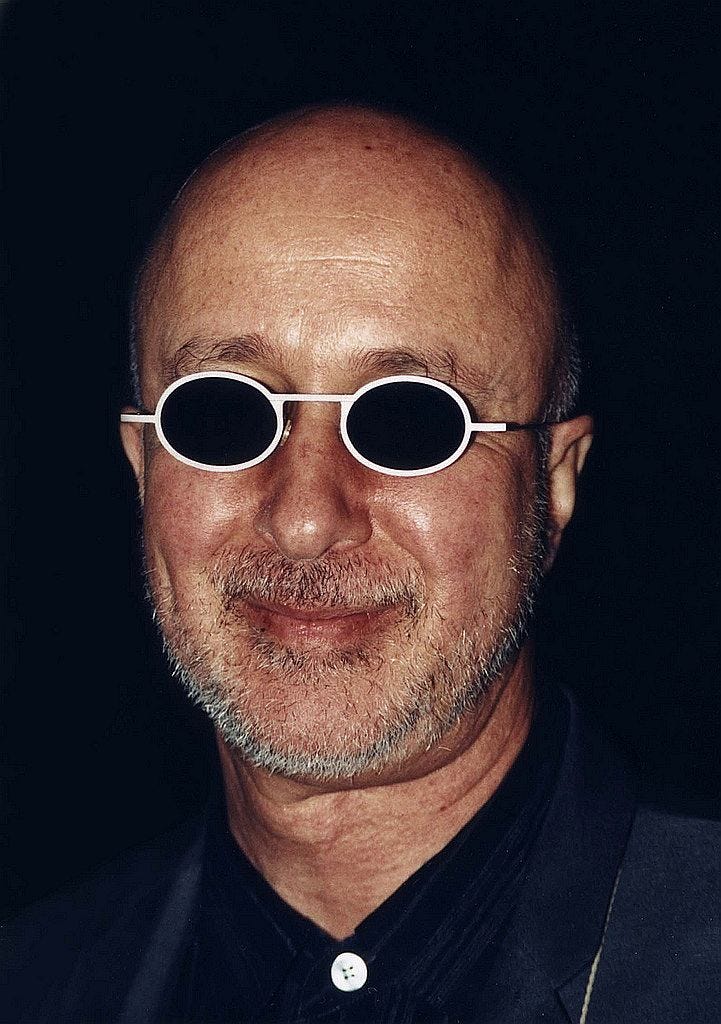
When did you get to work with Ray?
The first time was when he hosted Saturday Night Live in the seventies. I was in the house band back then, for the first five years. I’m not sure if it was in the first year of the show -- I think it was. He had his original five horns on this show and did some numbers with him; they were reunited for the show. He had a pop album out at the time and did a couple of tunes from that as well. For those tunes his horns were combined with our band. The thing I’ll never forget was, he had “Oh, What a Beautiful Morning,” jazz waltz style. I was playing organ behind him. In the first verse I was supposed to play licks behind what he was singing. And I was terrified. I was about twenty-five years old at the time, and here I was, playing organ behind Ray Charles. I couldn’t believe it. I was very timid, of course. And he stopped the whole band in the rehearsal and he said, “Organ! Play it with some soul!” And I was frozen, you know, until Howard Johnson, my good friend who had put that band together for Howard Shore, who was the musical director … Howard Johnson was the contractor at that time. He had hired everybody except for me because Howard Shore knew me from Canada. But we all became friends and are all still in touch. And Howard Johnson said, “That’s okay, Ray. Count it off again. He’s got it.” This sort of broke the frozen spell there, which seemed to go on forever in my mind. But after hearing Howard Johnson’s reassuring voice Ray counted it off and it was life or death for me at that time. I just went for it, and then Ray said, “Yeah, that’s more like it.” I was just thrilled; I could relax. So I played organ behind him.
Did he talk with you about what kinds of registrations he wanted?
This is so long ago, but I think he demonstrated a little bit on piano, like, “Oh wow, what a beautiful morning. Wow …” He sang a little bit like that. Once I heard that I was able to copy it, at least as a jumping off point.
Those wows were like smears?
Yeah.
What other work did you do with him?
The second time -- and I told this in Rolling Stone as well -- was on a wonderful Cinemax music show, A Keyboard Summit. This was with Fats Domino and Jerry Lee Lewis. It was called Fats and Friends. The format was that I would do a short interview with each of them. Then each did a set on his own, the other two with their own bands but Ray with a house band put together for me by the producers of this show; their names were Bob Vernon and Dave McVernitt [sp?] and they were New Orleans music biz guys, kind of knowledgeable. So Ray was going to play with me and this house band, and then all three pianists would play together. There was a rehearsal in a nightclub called Storyville. There was no air conditioning that I can remember; it was over ninety degrees in the club. With all three of these keyboard guys onstage together, it was very fraught with tension. One of the tunes we were going to do was “Jambalaya,” because each of the three guys had recorded it on his own.
Their arrangements must have been different.
Different arrangements and different keys! Fats Domino’s key was D-flat. And Jerry Lee had never heard of that key. He thought that was preposterous. He said to me, “D-flat? That’s ridiculous!” I said, “Well, what key would you do it in?” He says, “E, C, G …”
Guitar keys.
Yeah, those are the kinds of keys he played it. Fats would only play it in that key. So I didn’t know what to do. Again, I was pretty inexperienced, and I said to myself, “I’ll ask the Genius.” So I go to Ray. I said, “Ray, we’ve got a little problem. Fats only does it in D-flat. Jerry Lee can only do it in C or one of the white keys” … no pun intended … “I’m not sure what to do.” He says to me, “Man, I can do it in any key you want. Just get me out of here.” Eventually Jerry Lee could see that I was at a loss, so he says, “All right. What are the chords?” I just showed him the three chords in D-flat. He ended up just singing it; I don’t think he played much at all. It turned out brilliantly, of course, and I just called the rehearsal off. I then decided to go and visit each guy in his hotel and Fats at his home; it was in New Orleans. That’s what I did the day of the show. I went to each guy individually. I think they appreciated the show of respect. And I just rehearsed with them myself. Ray was so kind to me when I came to see him. He said, “Can we get three girls?” And I did: I asked Allen Toussaint, who was a friend of mine, and he recommended three background singers. And Ray did “Drown in My Own Tears” and gave it his all, as he always did.
Did he appear on the Letterman show?
He did Letterman a number of times. When Ray came on the show, he was familiar with it; I think he had seen the show. He played with my band and me a number of times, one time when we were in Los Angeles and he did “What’d I Say” with us. Of course, everything he played was brilliant. Every rehearsal was for real. He didn’t play a single note that didn’t have soul.
It’s always surprising to hear how much Ray revered the great jazz pianists, Tatum and Peterson.
You know, I remember back on that Saturday Night Live watching him arrange right on the spot, picking out notes in the orchestration that he had written and changing him. The charts were very sophisticated, very big band oriented, with big chords and things that I didn’t know at the time that he was hearing and dealing with just by ear. That was impressive to me. I saw him in clubs too, mainly playing blues style against that. Everything he played was exactly what I wanted to hear. It was my dad who turned me on to him when I was a kid. My dad, who was quite a conservative lawyer up in Canada, had very hip musical tastes and loved the great vocalists like Sarah Vaughn and Billy Eckstine. He’d play me those people, and Ray Charles, on Sundays, when he would relax and put on record. And of course that Ray Charles organ sound was a big influence on me -- that record on the ABC label, when he did “Outskirts of Town,” and of course “One Mint Julep.” He would play with that straight, no-Leslie sound.
Marian McPartland has talked about how Ray often tended to play behind the beat but sing ahead of the beat.
Well, I did learn one of the secrets of being able to play with him. He would alter the time the way he wanted it, especially in the bridge. I can’t remember whether he would speed the bridge up or slow it down, but the key was that he was playing drums with his feet. As he played he would indicate what he wanted: His body would sway and his feet would be doing the foot on the right and the snare with the left foot. I would always say to whoever was on drums, “Just watch his feet. Whatever he does, you do.” In New Orleans I remember him accusing the drummer of slowing down at the bridge: “Man, you’re dragging.” I didn’t know the trick at the time. And the drummer would say, “I swear to you, I’m not dragging.” It was really that he wanted it sped up and the drummer couldn’t see his feet. So from then on, if I walked in and the drummer couldn’t see his feet, I’d say, “Hold it. We’ve got to change something.” They’d say, “We’re late. We can’t change the drums.” “No, you have to. You cannot play unless the drummer can see his feet.” You’ve got to go with those feet. That’s the only way to play with him. Otherwise he’s not going to be happy.
Bruce Hornsby
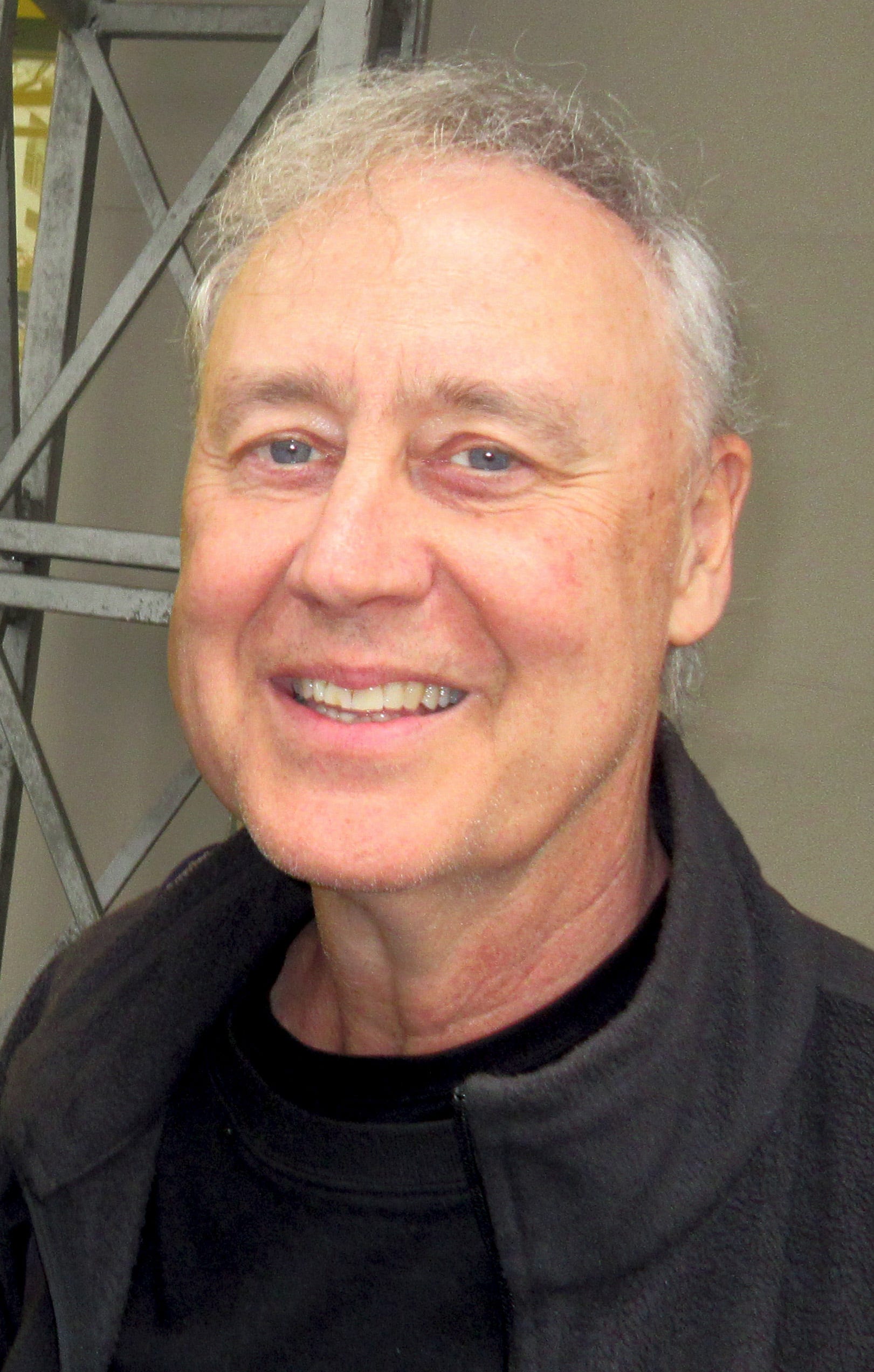
… I never met Ray Charles, but I have one recent story. A year and a half ago, January of 2003, I was part of this concert in Anaheim at the Arrowhead Pond [now the Honda Center]. It was a tribute to Elton, so you had Brian Wilson, Brian McKnight, Randy Newman doing “Benny & the Jets,” Jewel, Vanessa Carlton, John Mayer, Mike McDonald, Rufus Wainwright, Diana Krall — it was quite a broad stylistic array of geeks playing. Ray Charles was also on the bill.
About halfway into the concert, maybe ten of us had played songs. We were all doing Elton songs before Elton came out and played about eight songs and they gave him this award. Then Ray Charles comes out. He’s a little feeble. He’s led out to this little electric piano. And he sings “Sorry Seems to Be the Hardest Word.” And from the first line — “What do I have to do to make you love me?” — all the artists were standing over in this little arena on the side of the stage. We all just looked at each other like, “Oh, my God. We should all just go home.” It was one of those moments when you realize that this guy has got it and we don’t. It was just unbelievable. He sang this song and everybody felt like the concert should have ended right there. I’m so glad I wasn’t the guy following him; I’m so glad I’d already performed.
Did he influence you musically as you grew up?
Not so much. I got into the piano from hearing Elton and Leon. It’s sort of idiotic how you get turned on to people, but I was turned on to Ray Charles because I was into Joe Cocker. Don’t get me wrong. There’s nothing idiotic about that; I love Joe Cocker to this day. But it’s just nutty how you’re turned on to one of the icons by someone who’s been so influenced by him.
I didn’t really delve deeply into Ray Charles’s music until maybe ten years ago. So has he been an influence on me? Not so much, although I love it and it totally moves me. And, you know, I do “Lucky Old Sun” at my concerts, so on that level alone it’s an influence. But I don’t try to sing like him because I don’t have that kind of voice. I would say that Sam Cooke has been more of a vocal influence on me these past ten years than Ray Charles, maybe because Sam Cooke’s voice was not as gravelly. To me, it’s something I could cop more naturally than trying to put on this faux voix. To try to do my Ray Charles imitation seems like it would be a little boneheaded.
####