
The Cranberries Carry On
USA Today, April 23, 2019

Just before getting the news that Musician Magazine was being shut down, I was busy as usual doing the things that editors do: budgeting, paying writers and photographers, making assignments, even editing. Our last cover featured Sheryl Crow – or, I should, there was a photo of Sheryl in the upper left corner, the rest of the page being taken up by a shot of someone, possibly a musician, staring at a computer screen beneath the prophetic headline: “Get Ready for MP3.”
(This design was ordered by the head of Billboard Publications, Howard Lander, whose puzzling plan was to negate the magazine’s history of stellar artist profiles to focus primarily on the music business, despite there being no evidence that this was what it needed. I have to add that at the same time he was trying to stir up more interest on his other property, Billboard, who had been covering the biz definitively for decades, but boosting artist features in the mix.)
That issue, dated April 1999, was our last. As always, we were well ahead of deadline in working on our next one, with two more after that in early planning stages. According to my schedule, the Cranberries would occupy that teeny square in May, followed by Jamiroqai in June and Smashmouth in July. I never got around to assigning the last two, but I actually did have my interview with the Cranberries ready to file.
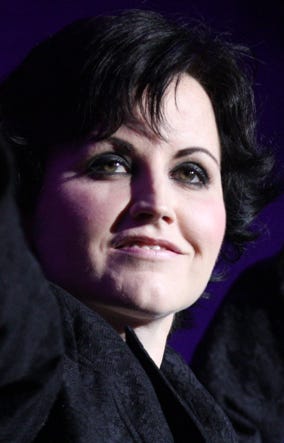
We spoke at a poignant moment. On New Years Day 2018, guitarist Mike Hogan and his bandmates in the Cranberries were expecting a bright year ahead. He and lead singer Dolores O’Riordan had been crafting songs since March. In three months they would embark on a concert tour of China, after which they would start work on a new album -- the seventh since their debut in 1993.
In a moment, on January 15, everything changed when their charismatic singer Dolores O’Riordan, just 46 at the time, drowned in a bathtub at the London Hilton On Park Lane; an inquest ruled her death accidental as a result of alcohol intoxication. After her funeral, the surviving Cranberries faced some pressing questions. One of them was whether they had any future after the loss of their charismatic frontwoman. And if they did, how could they move forward, not just with new music but with the material that featured O’Riordan.
They had just resolved these issues when I spoke with their guitarist, Mike Hogan. What had been destined for Musician ended up in the pages of USA Today.
****

How did the idea come up for doing this album?
I guess we go back to January of last year, when Dolores passed away. Up until literally a few days before she and I had been over and back — she was based in New York at that time and I was here, but I had traveled a lot the year before. We were very excited about the direction the album was taking. Just a few days before we were discussing how we were supposed to go to China and do a tour there in March of last year. Then when we came back from that we were to go in and record. Hopefully we would have even more songs together at that point.
So I get a phone call on the day Dolores passed away. I had to take all that onboard. It’s absolutely hard to believe even still. You get that call and you think they’ll call me back in an hour and tell me there’s been a dreadful mistake. But obviously that wasn’t to be.
A few weeks go by. The funeral happens. You’re sitting around and you’re going, what am I doing here? I’ve got all this stuff in a hard drive in my studio. Do I listen to it? Do I forget about it? Do I leave it another six months? Whatever way it was, the draw was always there for me to go to it. That’s what I ended up doing.
I set myself a two-hour window every day to go through this stuff. That was just about the right amount of time before it got a bit too hard to take everything in. You’re listening to some of the lyrics and certainly they take on a new meaning, even though I know what a lot of the songs are about. They’re not anything to do with death, as people will probably think. It was genuinely written as another Cranberries album, about the end of a certain time in Dolores’s life. She’d had a really rough few years. That summer when we’d started this album, in June up until December, she felt like she’d put all that behind her. A lot of these songs were really about that.
So I listened to it and started to glue it all together. The demos I sent to her tended to be rough ideas. She’d put rough vocals over them. I’d start to patch the bits together. Suddenly the song starts to take a shape and I thought to myself, “Wow, this album is actually really strong!”
I knew there was a hard drive in Dolores’s apartment in New York with songs that she had been working on on her own. She hadn’t yet sent me toe songs that we’d co-written. I managed to get Dolores’s partner at the time to come over to Ireland and give me everything he had. I ended up with the eleven songs that are on the album. There were lots of half-finished things — bits of choruses, bits of verses — but there was no way to use them. They were lovely ideas but they weren’t finished.
Once that all happened, I contacted Mike and Ferg. I filled them in on everything and, more importantly, I sent them the songs. They absolutely loved what they heard. We were going, “What do we do? Do we do this album? Do we just forget about it?” It’s very hard to know. We spoke to her family to get their feeling on it. They knew how excited Dolores had been about doing this album. It was the first album of new material we’d done in quite some time. They were like, “Whatever you want to do, you do it. You have our full blessing. We’ll leave you alone. We trust you.”
The final part of the puzzle was that we contacted Stephen Street. For us, it was a no-brainer because Stephen has produced so many of our albums. He knows us better than anybody else in that sense. We sent the songs to Stephen and the little [unintelligible] group that we were sharing all the bits and pieces with.
Stephen suggested, “Look, you’re very emotional now. It’s very raw. This is the time to go in and capture that. Don’t leave this album to sit on a shelf for a year. You don’t know how you’re going to feel. You might not even want to do it in twelve months’ time. So let’s do it now. If we’re in the middle of it and we feel it’s not working or it’s too emotional, we can pull the plug on it.” Because nobody knew about this. This was off our own back.
The sixteenth of April last year was the very first day of recording.
Was there any hesitation over the fact that Dolores was not going to be a part of the recording process?
Not really. At the end of the day we would take home what we’d done and listen through it, just to double-check. You always get more ideas when you’re sitting at home. Of course you can’t help but wonder what she’d make of this, what she would have done different.
Historically, when we recorded, Dolores would come in on the first day and give us three or four guides. She didn’t like to hang around the studio. She got bored when you’re doing drums, which is in fact quite boring to play the same song round and round. So she’d head off. A day or two later, she’d come back. And once we were up and running, she would come back every evening and do her vocals then. She’d listen to what we did during the day and go, “Oh, that’s gonna clash with my vocal,” or “I love that!” She’d critique what we’d done. She would give her opinion that way. You’d miss that side of it, where we were working from her vocals and using them for the direction in which each song was gonna go.
“Lost” is a perfect example, where she’s quite timid and vulnerable at the beginning. Then it rises and rises. We followed that vocal as we played. A lot of the songs were like that. If we’d come in and said, “I don’t care what did, this song is [sounds like: fee airy?],” it would have destroyed everything. So we worked off it that way.
When I brought over the early rough mixes, I was delighted when they said, “It sounds like the four of you were in one room.” It didn’t sound like a patch-up job with a bunch of things that were left over. We sounded like a band in the same room, playing new songs together. That’s what you want to capture.

What were her demos typically like?
We’d been doing it two ways for a long, long time. In the very beginning, it was basically me playing guitar on a demo and then she’d come back and we’d rehearse as a full band. But as technology moved on, we learned that you could record your whole demo idea within a program. So I would program drums, play a very rough bass and then play the guitar and whatever keyboards. I’d send that to Dolores. If I’d send her three songs, she might say, “I love these two. Let’s learn them.”
Then she’d ask me to send the files to her. Her partner was a bit more tech-savvy than she was. She’d ask him to make the verse longer or shorter or the chorus longer, whatever it might be. She’d chop it up to fit her vocal.
So the demos had a full instrumentation but they were really rough. The drum programs wouldn’t be very good. It was always Cranberries but you needed the four of us on the track to make it sound like a proper Cranberries song. We knew that during the demos, that these were only rough ideas to give everyone a direction of where the song was going.
But this wasn’t the first time we’d used demo vocals and guitars. Sometimes you do a demo and you’re very emotional or whatever. Trying to capture that again can be almost impossible. So over the years we’ve sometimes preferred the demo to what we were working on. This isn’t the first time we’ve done that, but it’s obviously the first time where the entire album was demos.
It was the same with the tracks that Dolores wrote herself. She worked with a couple of people she liked to work with in the studio. The basis of the track would be there as well. It wasn’t just a bit of guitar and a vocal. They were very much formed.
Did she sing demos with the same conviction she brought to her final takes?
Like I said earlier, there are songs with a full vocal, from start to finish. But whatever it was, as she was recording it she wasn’t really feeling it or something. The vocal is there but it isn’t to a standard that Dolores wouldn’t be happy with. So we didn’t use the song, even though it had great potential. If she had been more in the zone, it would probably have made this album as well.
We were very careful about that. We even told the record company, “Look, we might end up with only seven or eight songs here, if we feel there’s a vocal here that isn’t really making it.” But she’s such a strong singer that even on an off day she’s better than a lot of people’s on-day.
What was it like to know that this time in the studio would be your last time together as the Cranberries?
During the few weeks we did it, every morning was kind of weird because you go in, we’d have our coffees, we’d joke around as usual. Then we’d go into the room and put on the headphones, and suddenly there’s Dolores again and you’re reminded that she’s not with us anymore. The day would pass by and you’d be focusing on getting the song right, coming up with new parts and all the things you would normally do to make it good. Then you’d remember again in the evenings.
For me, the day that stood out was the very last day when the three of us were together. Normally our process was to do drums and bass in the first couple of weeks. Then we’d start layering all the other things on top of that. This song we did so the boys would have been finished was “In the End,” which is the title track. I was very much aware that this was the last time the three of us were going to be in the studio together, playing as the Cranberries. It was sad because not only did we lose Dolores but it was the end of this for all of us. Mike, Ferg and I had been playing together long before we met Dolores. We’d been doing this since we left school. So it was weird to be looking at each other. I don’t know if the boys were thinking the same thing, but I certainly was aware that once we finished that track, that was the last time we’d play in a studio together as the Cranberries.
Did you have a ceremonial last drink or anything?
We went out at the end. I think it was about four weeks and even though the boys had their main parts down they’d always hang around for overdubs or as a bit of precaution. After that they went away and I was finishing another week of bits and pieces. We went out the last night of those four weeks with Steven. My guitar tech, who has been with us since the beginning and would do anything and everything for us, went out with us too and we had a big blowout. There were lots of stories about mad things from over the years [laughs].
You mentioned “Lost.” That’s one track where you’ve added strings, along with “Catch Me If You Can.”
Even when we did the demo, I was kind of listening and thinking, “This needs strings. It’s building and building, so it needs something other than just us hammering away.” The other thing was that the quartet that played on this album did our first two albums, Linger and Ode to My Family. We brought them back. It was a nice way to come full circle.
When you’re writing, you just hear these parts. You may not hear them straightaway but when you’re sitting at home or thinking about the song later in bed, you might hear a counter-melody. You do it roughly on a keyboard, always with the thought that we’ll get real strings later on.
People might ascribe a certain meaning to these lyrics that wasn’t intended. The title alone, In the End, seems to reflect on the sadness of having lost Dolores, along with some of the lyrics: “You can’t take the spirit.” Do you now hear these lyrics differently than you might have otherwise?
I don’t know. I’ve been with them for so long. I was with them when they were born. It just makes me sad to know what she went through for a long time, more so than listening to them in a different sense. I don’t know if it’s human nature but you wonder if it’s fair that somebody has to go through all of this. I’m sure that many of us feel that way about lots of things in life. That’s what I felt, especially in the first few weeks after she passed away, that it was unfair to someone who had turned the corner on so many problems that she was very open about.
In “Summer Song” the lyrics include “we could have a blast” and then, a couple of times, Dolores sings, “Maybe we’ll have an accident” and the music stops to emphasize that line!
Dolores was a massive fan of Morrissey. We all were huge fans of the Smiths. If you go back through a lot of our albums, lines like that come out so unexpectedly. She would throw these dark things into whatever was the brightest pop song on the album. There’s a heavy Smiths influence in those kinds of lyrics. Believe me, when I’d first hear those lines in rehearsals, I’d be like, “What did she say? Did she just say that?” Then you put it into perspective of who we are and where we come from and it all starts to fit together and make sense.
How did working with Dolores change each of the guys in the band as you move on with your own projects?
When we met Dolores, we’d been playing a couple of years. And we were dreadful. We were basically just winging it. Dolores had been playing since she was a very young child. She was [streets?] ahead of us musically. The great thing about working with somebody like that is that there’s an immense pressure on you, in a good way, to catch up. It pushes you constantly. We’re grateful to her for that. You don’t just come in and wing it anymore when you’re with somebody who is able to see through that.
We spent a lot of time together, working on these songs. Especially earlier on, she would come in and go, “That’s great, but can you do this or do that?” It makes you think outside of your comfort zone all the time. That’s a good thing. As a musician, you need that. It’s very easy to learn a couple of songs and be happy with that.
Then there was that healthy competition between us. I’d write a song with her. Then she’d write on her own. Then you go, “I’ve got to counteract that” and you write another one. It’s a really healthy thing. It’s something I’ve really missed in the year that’s passed.
The combination of that and touring probably nine months of the year makes you tighter as a band. It’s a huge help. We’ve often done tours and then gone in to record an album and we’ll have the whole thing done in three weeks because we’re so tight off the back of the tour. I’ve never taken that for granted. You’d like to think that we all did eventually catch up with each other on an even level.
When you think of it, I had songs like “Linger” and “Dreams” before I ever met Dolores, but they were just pieces of music. In fairness, I could have handed those songs to somebody else and nobody would have heard of them again. You get lucky that you meet somebody you click with.
What are you and the other Cranberries doing nowadays?
We haven’t really spoken to each other that much. I think everybody wants to continue on in music somehow. In the last few months I’ve looked at writing for other people. I’ve been comfortable writing with Dolores for so long. We were lucky to have massive success with the songs we wrote together. So I’ve approached mainly the [unintelligible]. I’d like to try to do this with other people and see what direction she would take.
I don’t really see myself in a band again. I’ve done that and it’s been great. But that’s behind me now. I like to work more with people behind the scenes in the months that follow. This could become my full-time job as opposed to just dabbling with other things. The Cranberries were always there as a fall-back, but that’s gone now. With a bit of luck, that will help me grow as a writer.
What is your favorite cover of a Cranberries song?
There are so many! I like the ones I hear on ads, like an acoustic version of “Dreams” or a piano version of songs we wrote, where I don’t even know who did it. It’s hard to pinpoint one in particular, especially because I tend to hear them in the background and wouldn’t know who it was or how it came about.
But I have to say it’s a nice feeling that something you wrote, particularly as a kid, thirty years later. That’s such a nice feeling that no matter what I do for the rest of my life, I can at least say I’ve left that legacy behind me.

####